10 Easy Ways to Reduce Your Energy Bill at Home (2026 Update)
By Rowan Watts | Updated September 2026
This post contains affiliate links. As an Amazon Associate, ENERGY FOR THE TAKING earns from qualifying purchases at no extra cost to you.
Did you know the average household now spends well over $1,700 annually on energy bills? With utility rates still climbing into 2026, finding ways to reduce your energy bill at home is not just good for your wallet, it is one of the highest-return improvements you can make to your house. Whether you own or rent, small changes compound into serious savings. In this guide, we cover 10 easy, practical ways to lower your electric bill without sacrificing comfort, including the monitoring tools that show you exactly where your money is going.
Table of Contents
- Upgrade to Energy-Efficient Appliances
- Install a Smart Thermostat
- Switch to LED Lighting
- Seal Windows and Doors
- Put a Stop to Phantom Energy with Smart Power Strips
- Optimize Your HVAC System
- Wash Clothes in Cold Water
- Conduct a Home Energy Audit and Track Your Usage
- Invest in Solar Panels
- Charge Your EV Smarter at Home
- Summing It Up
- FAQ
1. Upgrade to Energy-Efficient Appliances
If your home still runs on outdated appliances, you could be wasting more energy, and money, than you realize. One of the easiest ways to reduce your energy bill at home is to upgrade to ENERGY STAR-rated models. These appliances are designed to use significantly less energy than standard models without compromising performance.
Start by focusing on high-consumption devices like refrigerators, washing machines, and HVAC equipment. These account for a large share of your home’s energy use, so even incremental improvements add up. An ENERGY STAR-certified refrigerator uses roughly 15% less energy than a non-certified model, and an efficient front-load washing machine can cut laundry energy use by about 25%.
Before you buy, compare the estimated annual operating cost printed on each EnergyGuide label against your current model. Over a few years, the savings on your electric bill can offset a meaningful share of the upfront cost. Also check the utility rebates and state programs still available for efficient appliances in 2026; many utilities refresh their rebate programs at the start of the year, so it is worth a quick check before you purchase.
2. Install a Smart Thermostat
Tired of manually adjusting the thermostat or coming home to a house that is too hot or too cold? A smart thermostat optimizes your heating and cooling automatically. These devices learn your schedule and adjust temperatures so your home is comfortable when you are there and efficient when you are not.
Smart thermostats use sensors and algorithms to detect occupancy and adjust accordingly. If you leave for work at 8 a.m., the thermostat can scale back heating or cooling until shortly before you return. Many models also factor in local weather forecasts and utility time-of-use rates to shift load away from peak pricing hours, which matters more than ever as more utilities move to time-of-use plans in 2026.
Nest and Ecobee remain the leading options. Nest models are known for their learning algorithms and clean design, while Ecobee units include remote room sensors for more even temperature distribution. Both offer solid apps and voice assistant support. If you want a deeper comparison before buying, we cover sizing, compatibility, and savings expectations in our dedicated smart thermostat guide.
To maximize savings, set schedules that match your routine: lower the heat at night and during work hours. The EPA estimates a properly programmed thermostat can save roughly $50 per year or more on heating and cooling, and many utility companies offer rebates that knock $50 to $100 off the purchase price.
3. Switch to LED Lighting
If you are still using incandescent or CFL bulbs anywhere in the house, switching to LED lighting is the simplest win on this list. LEDs use up to 75% less energy than incandescent bulbs and last about 25 times longer. Compared to CFLs, they are more durable, contain no mercury, and deliver instant, flicker-free light in a range of color temperatures.
The math is straightforward. Replacing a 60-watt incandescent bulb with a 10-watt LED saves roughly $50 in electricity over the bulb’s lifetime. Multiply that by every fixture in your home and the savings add up quickly. LED prices have continued to fall, and many utilities still run discounted bulb programs in 2026.
Prioritize high-traffic areas first: the kitchen, living room, and outdoor fixtures that burn hours every evening. Choose dimmable LEDs for dining rooms and bedrooms, and look for the ENERGY STAR label for verified performance. For a room-by-room breakdown of color temperature and brightness, see our home lighting guide.
4. Seal Windows and Doors
Drafts from windows and doors can account for a significant share of your home’s heating and cooling losses. Sealing those gaps is a fast, low-cost project that pays for itself within a season or two, and you do not need to be a DIY expert to do it.
Start by identifying drafts. On a windy day, hold a lit incense stick near the edges of windows and doors; if the smoke wavers, you have found a leak. Common culprits include worn weatherstripping, cracked caulk, and poorly fitted frames. You can also use a box fan with a curtain test, or check for cold spots with the back of your hand.
Once located, seal them. Weatherstripping works for movable components like doors and operable windows, while caulk handles stationary gaps around frames and trim. A door sweep blocks drafts at the bottom of exterior doors. All three materials are inexpensive and install in an afternoon.
If your windows are old or damaged, upgrading to double or triple-pane units with low-emissivity (Low-E) coatings can meaningfully reduce heat transfer. The upfront cost is higher, so treat full window replacement as a longer-term project and capture the cheap air-sealing wins first.
5. Put a Stop to Phantom Energy with Smart Power Strips
Electronics can quietly drain energy even when switched off. This “phantom load” or “vampire power” comes from devices like TVs, gaming consoles, chargers, and printers that draw standby power around the clock. It can account for up to 10% of a monthly electric bill, which is money for electricity you are not even using.
Smart power strips solve this by cutting power to idle devices. Look for models with energy monitoring, surge protection, and app or voice control. Popular options include the TP-Link Kasa Smart Power Strip and Belkin’s Conserve line, which let you switch entire outlet groups remotely and schedule them off overnight. For single devices like a coffee maker or TV, a simple smart plug with scheduling and energy tracking does the same job for a few dollars.
To get the most from the setup, group electronics by usage pattern. Put the TV, soundbar, and console on one strip and your computer, monitor, and printer on another, then turn off whole groups with one command or schedule. You will trim phantom load and extend the life of your electronics at the same time.
6. Optimize Your HVAC System
Your HVAC system is the backbone of home comfort and one of the biggest energy consumers in the house. Keeping it efficient is one of the most reliable ways to lower your energy bill.
First, schedule regular maintenance. A professional tune-up once or twice a year catches small issues before they become expensive repairs, cleans coils, and verifies refrigerant levels. Second, replace air filters every 1 to 3 months. A clogged filter restricts airflow and forces the system to work harder, while a clean filter improves both efficiency and indoor air quality.
Third, use ceiling fans to supplement heating and cooling. In summer, run fans counterclockwise to create a cooling breeze so you can raise the thermostat a few degrees. In winter, run them clockwise on low to push warm air down from the ceiling. Fans cost pennies per hour to run and reduce the load on your HVAC equipment in every season.
7. Wash Clothes in Cold Water
About 90% of the energy a washing machine uses goes toward heating water. Switching to cold water washing can cut laundry-related energy use by more than half while still getting clothes clean, and cold cycles are gentler on fabrics.
Modern cold-water detergents from brands like Tide, Persil, and Seventh Generation are formulated to work at lower temperatures, so you give up very little cleaning power. Pair that with smart drying habits: clean the lint trap after every load, use the moisture sensor setting to avoid over-drying, and air-dry on a rack or line when you can. Dryers are among the most power-hungry appliances in the home, so every load you line-dry shows up on your bill.
8. Conduct a Home Energy Audit and Track Your Usage
If you are serious about reducing your energy bill, a home energy audit is the best starting point. Think of it as a checkup for your house: it identifies where energy is being wasted and gives you a prioritized list of fixes.
A professional auditor inspects the home with thermal cameras and blower doors to find air leaks, insulation gaps, and inefficient equipment, then delivers a report with tailored recommendations. Many utilities subsidize these audits, sometimes offering them free or heavily discounted, so ask your provider before paying full price.
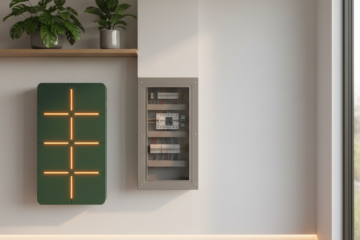
You can also run a DIY audit, and this is where a home energy monitor earns its keep. A whole-home energy monitor clamps onto the conductors in your electrical panel and reports real-time consumption to your phone, down to the individual circuit or appliance once trained. Instead of guessing which devices are driving up your bill, you see it directly.
Our top pick is the Emporia Vue 3 Home Energy Monitor. It installs in the panel with 16 included sensors, tracks usage circuit by circuit in real time, and reliably pays for itself by revealing one or two wasteful appliances you did not know about. If you want a premium option with on-device machine learning that automatically identifies individual appliances without extra sensors, the Sense Energy Monitor is an excellent alternative. Both integrate with smart home platforms so you can act on what they find. For full model comparisons, installation notes, and accuracy testing, see our guide to the best home energy monitors.
Whether you hire a professional or audit it yourself, act on the findings in priority order: seal air leaks, add insulation, then upgrade the appliances the data says are costing you the most.
9. Invest in Solar Panels
Looking for a way to slash your energy bill while reducing your carbon footprint? Residential solar remains one of the strongest long-term moves. Once installed, a properly sized system can offset most or all of your monthly electricity use, and homeowners typically save $10,000 to $30,000 over the life of the system. As utility rates continue rising, locking in your own generation protects you from future price hikes.
One thing to know in 2026: the 30% federal residential solar tax credit expired at the end of 2025, so incentives now come mainly from state programs, utility rebates, and net metering, which let you earn bill credits for excess power you send to the grid. Falling panel and installation prices have offset part of that loss, but incentive details shift year to year, so verify current 2026 rules for your state before signing a contract.
Before committing, confirm your home is solar-ready: roof condition, orientation, and shading all matter. A south-facing roof with minimal shading is ideal, but a qualified installer can assess your situation and model expected production. If a full rooftop system is out of reach for now, portable solar generators are a flexible starting point for offsetting smaller loads.
10. Charge Your EV Smarter at Home
If you drive an electric vehicle, home charging is now one of the larger line items on your electric bill, and also one of your biggest opportunities to save. Charging overnight during off-peak hours on a time-of-use plan can cut your per-mile charging cost substantially compared with daytime rates or public fast charging.
A Level 2 home charger makes that easy and safe. Level 2 units charge three to seven times faster than a standard wall outlet and pair with your utility’s off-peak schedule through built-in apps, so the car charges when electricity is cheapest. Our top pick is the ChargePoint Home Flex, a 50-amp, Energy Star-certified unit with flexible amperage settings, app-based scheduling and reminders, and wide EV compatibility via the J1772 connector. It is a straightforward upgrade for any EV owner who wants faster charging and lower costs. For a full breakdown of amperage, installation, and pricing, see our guide to the best Level 2 EV chargers for home.
One tip that pairs perfectly with this: track your EV’s charging circuit on a whole-home energy monitor like the Emporia Vue 3 mentioned in tip 8, so you can see exactly what charging adds to your monthly bill.
Summing It Up
Learning how to lower your electric bill does not require a renovation budget or an engineering degree. Start by measuring: a $100-ish energy monitor will show you where the money goes, then work through the cheap wins: LEDs, air sealing, cold water laundry, and smarter thermostat schedules. From there, bigger investments like efficient appliances, solar, and a Level 2 EV charger compound your savings year after year. Pick one tip from this list and start today; the savings show up on your very next bill.
FAQ
How can I track my home’s energy usage to identify waste?
A whole-home energy monitor like the Emporia Vue 3 or Sense tracks real-time consumption at your electrical panel and breaks it down by circuit or appliance through a smartphone app. Your utility’s online portal is another option, though most only show daily or monthly totals. Comparing usage month to month helps you spot trends and catch problems early.
Are there government programs or incentives to help me save on energy costs?
Yes, though the landscape changed in 2026: the federal solar tax credit and the credits for efficient home improvements both expired at the end of 2025. What remains are state programs, utility rebates for smart thermostats, energy audits, and insulation, and net metering in many states. Check your utility’s website and your state energy office for programs in your area.
How does weatherizing my home help reduce energy bills?
Weatherizing means sealing air leaks, adding insulation, and ensuring windows and doors close tightly. It prevents heat loss in winter and cool air loss in summer, which reduces the workload on your HVAC system. Air sealing is one of the cheapest improvements with the fastest payback.
What is the difference between kilowatts (kW) and kilowatt-hours (kWh)?
Kilowatts measure the rate of energy use at a moment; kilowatt-hours measure total energy consumed over time. A 1 kW appliance running for one hour uses 1 kWh. Your bill is charged per kWh, which is why energy monitors that report kWh by appliance are so useful.
Do I need an energy monitor if I already have a smart thermostat?
They serve different purposes. A smart thermostat optimizes heating and cooling, while a whole-home energy monitor shows consumption across your entire house, including appliances, EV charging, and everything else. Many households use both together.