Jackery vs EcoFlow vs Bluetti: Which Power Station Brand Wins in 2026?
Affiliate Disclosure: This post contains affiliate links. If you buy through our links, we may earn a commission at no extra cost to you. We only recommend gear we’d trust in our own homes.
Jackery, EcoFlow, and Bluetti dominate the portable power station market : and they’ve split it into three distinct philosophies. EcoFlow wins on speed, Jackery wins on portability and simplicity, and Bluetti wins on raw value per watt-hour.
But which one is right for your blackout kit? This head-to-head compares all three brands across the specs that actually matter, then tells you exactly who should buy which.
Quick Verdict
| 🏆 EcoFlow | 🪶 Jackery | 💰 Bluetti | |
|---|---|---|---|
| Best at | Charging speed & tech | Portability & simplicity | Value per watt-hour |
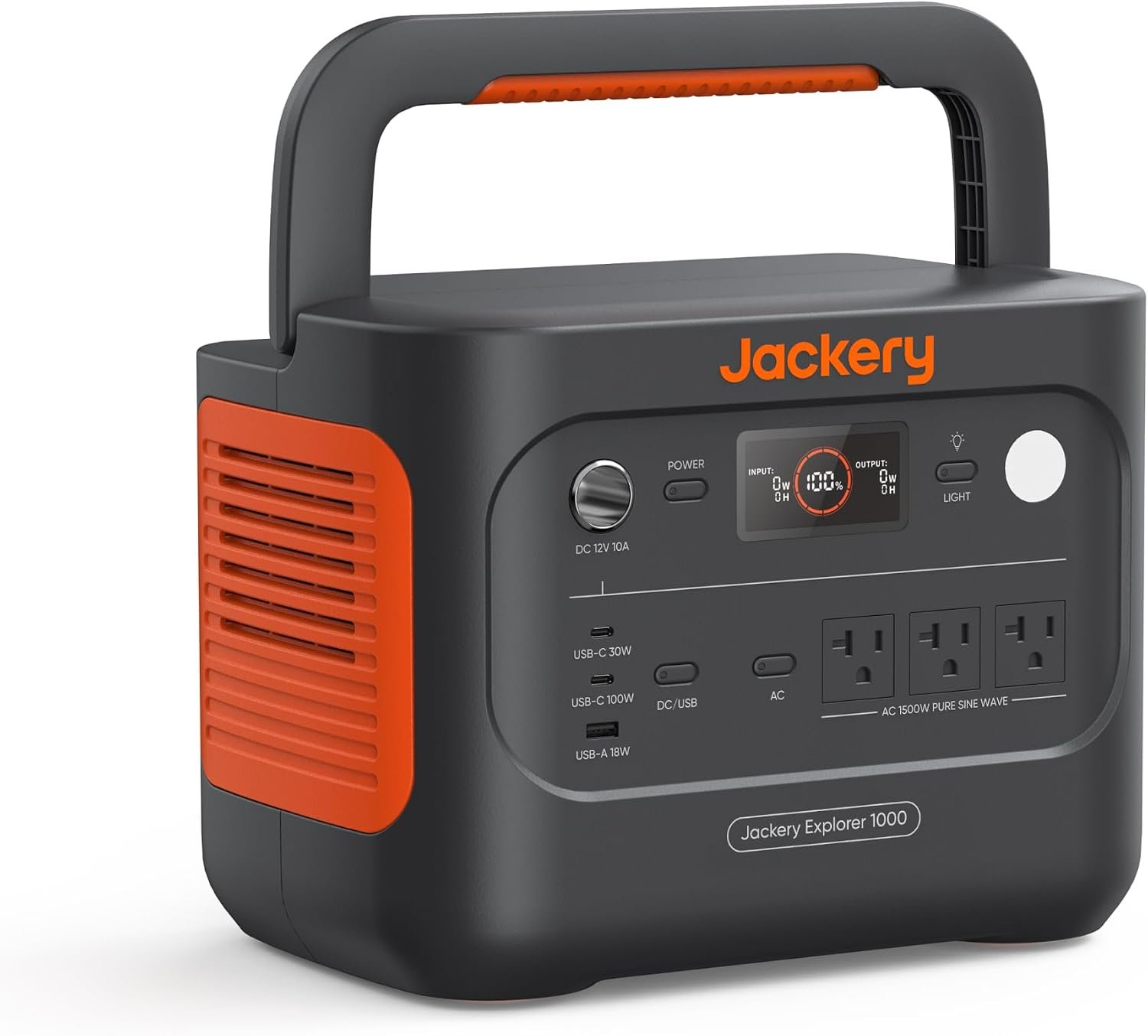
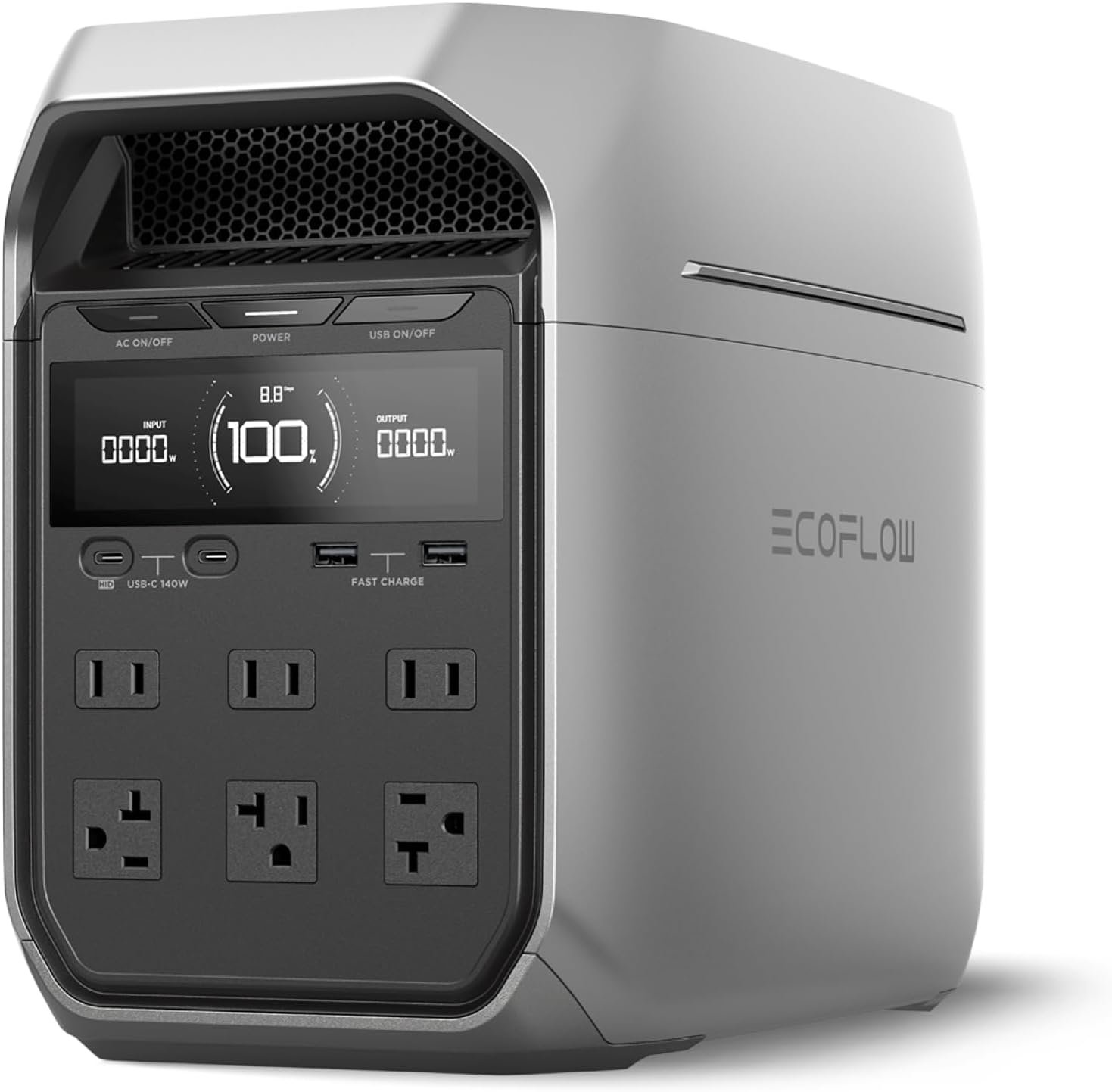
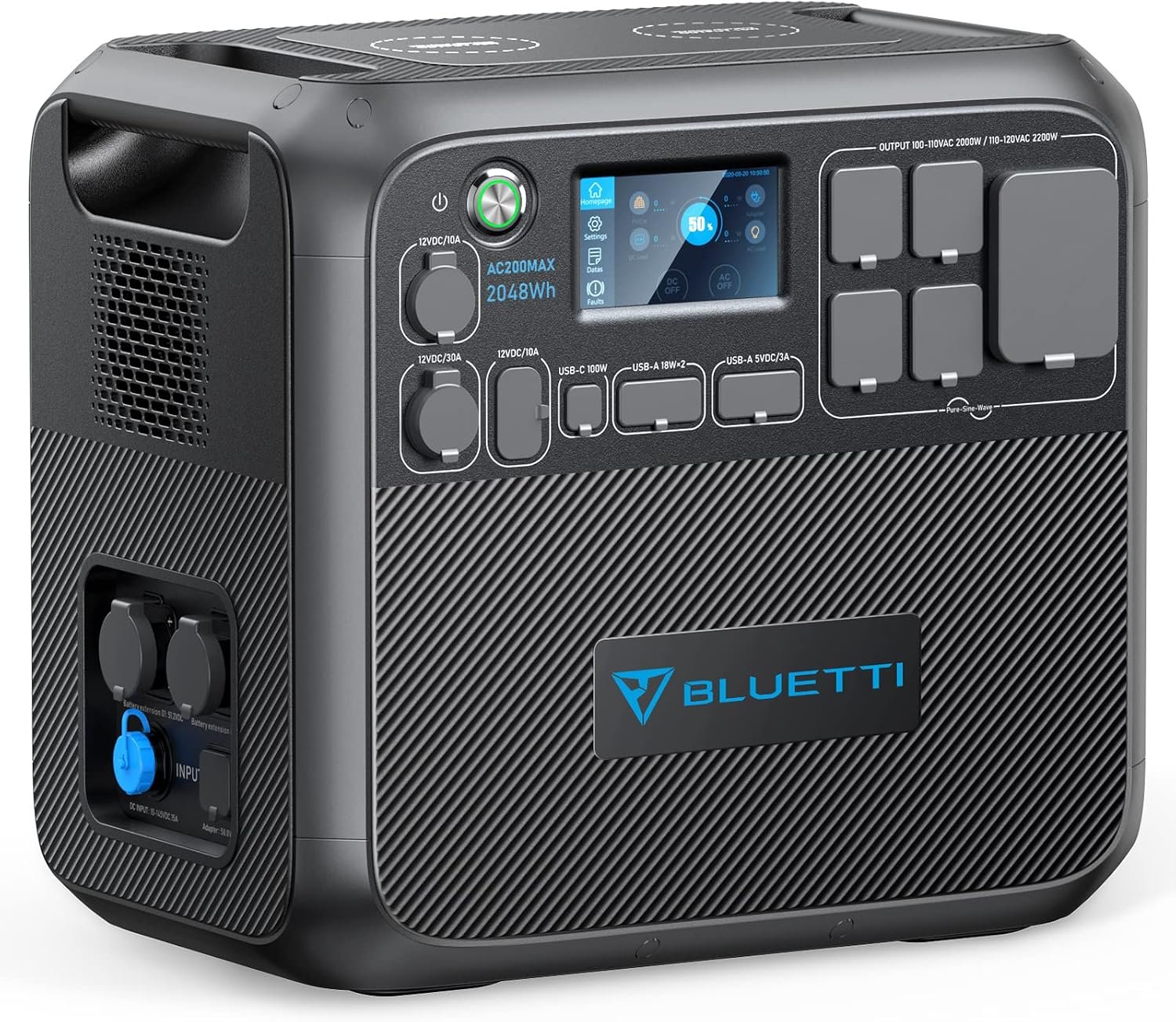
| Flagship pick | DELTA 3 Plus | Solar Generator 1000 Plus | AC200L · AC200MAX |
| Capacity | 1,024Wh (expandable to ~5kWh) | 1,264Wh (expandable to 5kWh) | 2,048Wh (expandable to ~8kWh) |
| Output | 1,800W (X-Boost to 2,700W) | 2,000W | 2,400W |
| AC recharge (0-100%) | ⚡ 56 min | ~1 hr | ~1.2 hrs |
| Max solar input | High | Moderate | 🏆 1,200W |
| Battery chemistry | LiFePO4 | LiFePO4 | LiFePO4 |
| Weight | ~28 lbs | ~32 lbs | ~62 lbs |
| Warranty | 5 years | 5 years | 4-5 years |
| Price range | $799-899 | $799-899 on sale | ~$1,299 |
Buy EcoFlow if recharge speed and smart features top your list → Check Price on Amazon
Buy Jackery if you want the lightest, simplest, most proven option → Check Price on Amazon
Buy Bluetti if you want maximum capacity per dollar → Check Price on Amazon
Brand Overview
⚡ EcoFlow : The Speed Demon
EcoFlow builds power stations around one obsession: recharge speed. Its X-Stream technology refills a DELTA 3 Plus from empty to full in 56 minutes : roughly twice as fast as anything Jackery or Bluetti ships in this class.
That sounds like a spec-sheet flex until you live through a multi-day outage where power flickers on for an hour at a time. Then “refills before dinner” becomes the whole ballgame.
- Strengths: fastest AC recharging in the industry, strong app ecosystem, UPS-grade switchover, slick modular expansion
- Weaknesses: premium pricing on bigger models; feature-heavy interface can feel like overkill if you just want “plug in fridge, done”
- Strengths: lightest designs in class, legendary ease of use, excellent warranty track record, widest retail availability
- Weaknesses: slower recharging than EcoFlow, historically conservative solar input caps, some models (like the 2000 v2) can’t expand
- Strengths: best capacity-per-dollar, biggest solar input ceilings, rugged build, huge expandability
- Weaknesses: heavy (the AC200L is a 62-lb stay-at-home unit), slower AC charging, app experience trails EcoFlow
- Jackery Explorer 1000 Plus: 1,264Wh base → up to 5kWh with add-on batteries. The cleanest starter path.
- EcoFlow DELTA 3 Plus: 1,024Wh base → ~5kWh with DELTA 3-series expansions, plus smart generator support.
- Bluetti AC200L: 2,048Wh base → up to ~8kWh with B230/B300 packs. Starts biggest, ends biggest.
- EcoFlow: 0-100% in 56 minutes (AC). Untouchable.
- Jackery: ~1-1.7 hours depending on model.
- Bluetti: ~1.2 hours AC : but its 1,200W solar input means off-grid recharging favors Bluetti heavily when the sun’s out.
- Bluetti AC200L: 2,400W continuous : runs nearly any household appliance
- Jackery (1000 Plus / 2000 v2): 2,000-2,200W
- EcoFlow DELTA 3 Plus: 1,800W (2,700W X-Boost surge for resistive loads)
- You live somewhere with frequent, unpredictable outages and want the fastest turnaround between them
- You love smart-home integration and app control
- You’re pairing with a smart generator or planning whole-home-style backup
- You want one box that does everything without an app tutorial
- Weight matters: apartments, seniors, home-to-campsite dual use
- You value a long-proven warranty process
- Multi-day outages are your reality and capacity is non-negotiable
- You’re building a solar-recharged backup system (that 1,200W input!)
- You want maximum watt-hours per dollar
- Best Portable Power Stations for Home Backup (2026) (coming soon) : our flagship roundup
- Best Solar Generators for Camping
- How Many Solar Panels Does It Take to Run a Refrigerator?
🪶 Jackery : The Reliable All-Rounder
Jackery is the brand that made portable power stations mainstream, and its Explorer line remains the benchmark for portability and dead-simple operation. The Explorer 2000 v2 packs 2,042Wh into just 39.5 lbs : roughly two-thirds the weight of comparable units : while the Explorer 1000 Plus offers genuine 5kWh expandability.
💰 Bluetti : The Value Tank
Bluetti’s philosophy is simple: give buyers more watt-hours per dollar than anyone else. The AC200L delivers 2,048Wh and 2,400W output for around $1,299 : typically $100-200 less than comparably-equipped rivals : with class-leading 1,200W solar input that refills the whole battery in about two hours of good sun.
Head-to-Head Comparison
Capacity & Expandability
All three brands have moved to long-life LiFePO4 batteries rated 3,000-5,000 cycles : so chemistry is now a tie. The difference is how each handles growth:
Winner: Bluetti : nobody else starts you at 2kWh at this price.
Recharge Speed
Winner: EcoFlow on grid power; honorable mention to Bluetti where solar is your only source during extended outages.
Output Power
For fridges, freezers, CPAPs, and microwaves, all three deliver. For well pumps or power tools, Bluetti’s headroom matters.
Winner: Bluetti, narrowly.
Portability
No contest: Jackery wins by a landslide. The 1000 Plus (~32 lbs) and especially the 2000 v2 (39.5 lbs for a full 2kWh) are built to move. EcoFlow’s DELTA 3 Plus (~28 lbs for 1kWh) is genuinely grab-and-go too. The Bluetti AC200L is furniture.
App & Smart Features
EcoFlow wins decisively. Its app offers granular control over charging behavior, output priorities, and storm-forecast auto-charging. Jackery’s app covers basics; Bluetti’s trails both. If you set things up once and never open the app again, none of this matters.
Warranty & Support
All three back their current LiFePO4 lines with roughly 5-year warranties : far better than the 2-year norms of budget brands. Jackery’s customer service has the longest track record of easy claims; EcoFlow and Bluetti are solid but younger support organizations.
Winner: Jackery on reputation, tie on paper terms.
Price & Value
Per watt-hour of base capacity, Bluetti is untouchable: the AC200L gives you double the DELTA 3 Plus’s capacity for about 60% more money. But note that Jackery’s aggressive sale pricing (the 1000 Plus kit regularly goes on sale) keeps it the value king in its class.
Winner: Bluetti overall; Jackery in the sub-$900 bracket.
Which Brand Should You Choose?
Choose EcoFlow if…
→ Check Price on the DELTA 3 Plus
Choose Jackery if…
→ Check Price on the Solar Generator 1000 Plus · Explorer 2000 v2
Choose Bluetti if…
→ Check Price on the AC200L · AC200MAX
FAQ
Is EcoFlow better than Jackery?
On technology and charging speed, yes. On simplicity, weight, and support track record, Jackery holds its own. EcoFlow suits tech-forward buyers; Jackery suits set-it-and-forget-it buyers.
Is Bluetti a good brand?
Yes : Bluetti consistently delivers the best capacity-per-dollar in the market with quality LiFePO4 cells. Trade-offs are weight and a less polished app.
Which brand lasts longer?
All three use LiFePO4 chemistry rated for 3,000-5,000 cycles (roughly a decade of outage duty). Battery lifespan is effectively a wash; warranty handling is where Jackery’s track record shines.
Can I mix brands : e.g., Jackery panels with a Bluetti station?
Usually yes with the right adapters, since all three use standard voltage ranges, but always match input limits. Staying within one brand’s ecosystem avoids compatibility headaches.
What about Anker SOLIX?
Anker is the fast-rising fourth brand with competitive pricing and strong build quality : we’ll cover it in a future four-way comparison.
Related Reading
Last updated: August 2026.