Best Home Energy Monitors (2026)
Affiliate Disclosure: This post contains affiliate links. If you buy through our links, we may earn a commission at no extra cost to you.
A whole-home energy monitor is the cheapest energy upgrade that changes how you live: the moment you can see the old chest freezer eating $30 a month, it gets unplugged. Most owners report trimming 8-15% off their electric bill within months. Here are the two monitors worth buying in 2026.
Quick Picks
| Product | Best For | Circuits Monitored | Price Range | Check Price |
|---|---|---|---|---|
| 🏆 Emporia Vue 3 | Best overall + value | Whole home + up to 16 circuits | $150-$250 | Amazon |
| 🔎 Sense Energy Monitor | Best device detection AI | Whole home (ML-based) | $299-$349 | Amazon |
The Picks in Detail
🏆 Emporia Vue 3 :
Best Overall
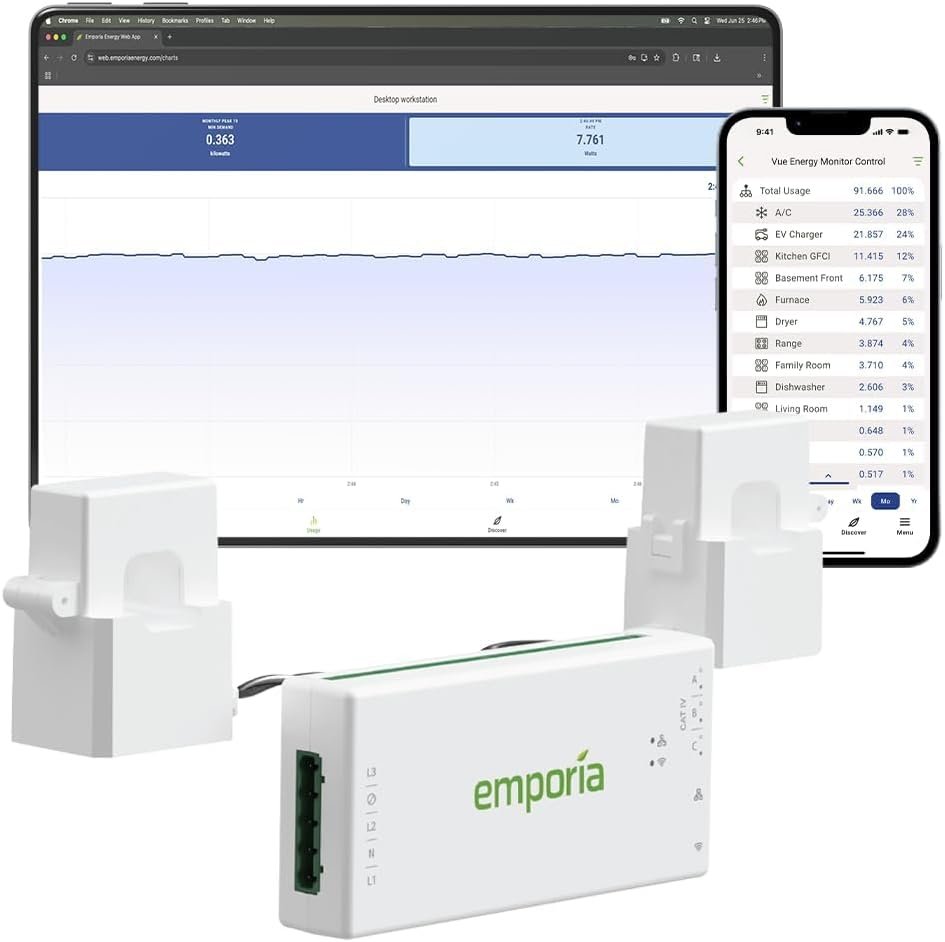
The Vue 3 clamps onto your main panel feeds plus individual circuits, streaming second-by-second usage to an excellent app. It’s the value king : roughly half the price of Sense while offering more granular data.
- Up to 16 individual circuit sensors : know exactly what the dryer, HVAC, and EV each cost per day
- Solar-ready: dedicated input tracks production alongside consumption, perfect for net-metering households
- Integrates with Emporia smart plugs and its own EV charger for full automation
- Users average ~10% bill savings, which pays back the hardware in under a year
- Genuinely impressive device recognition (“That’s the sump pump turning on”)
- Slick, polished app experience : the best-looking interface in the category
- Great for renters of single-family homes who can’t easily add circuit sensors… though panel access is still needed
- Phantom loads exposed: standby draw from electronics often totals 5-10% of a bill
- Failing appliances flagged: a fridge cycling constantly announces its dying compressor weeks early
- Behavior change works: simply watching real-time usage measurably cuts waste
- HVAC verification: heating/cooling is usually 40%+ of usage; monitors confirm whether thermostat changes actually pay
- Best Level 2 EV Chargers for Home (coming soon)
- Home Battery Backup Without Solar (coming soon)
- Best Portable Power Stations for Home Backup (coming soon)
The honest downside: installation means opening your electrical panel : either comfortable DIY or a $100-200 electrician visit. The app prioritizes numbers over elegance.
🔎 Sense Energy Monitor : Best Device Detection
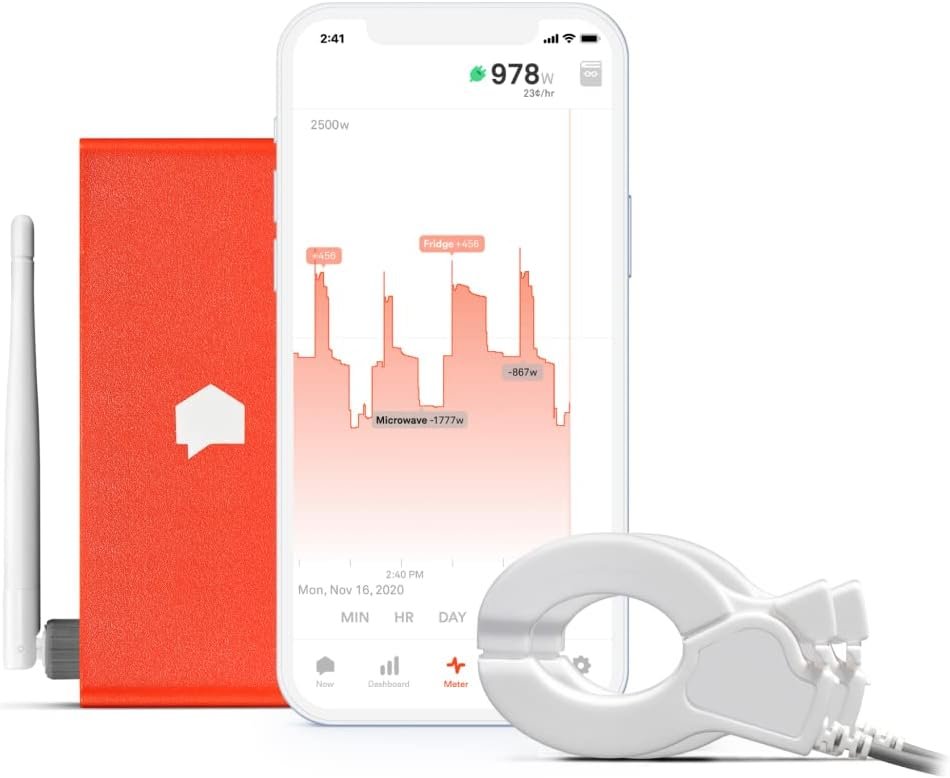
Sense takes a different approach: just two clamps on your mains, then machine-learning magic identifies individual appliances by their unique electrical “signatures” : no circuit sensors required.
The honest downside: detection is probabilistic : it never finds every device, sometimes misidentifies them, and can take weeks to “learn” a home. At nearly double the price, you’re paying for polish, not precision.
Which Should You Buy?
Buy the Emporia Vue 3 if you want hard circuit-level numbers, have (or plan) solar, or want the best price-to-data ratio. It’s our pick for most homes.
Buy Sense if you love beautiful apps, enjoy the detective game of device discovery, and don’t want to label sixteen circuits.
Both require opening your electrical panel : when in doubt, spend part of your budget on an electrician.
How Energy Monitors Save Real Money
FAQ
Do energy monitors work without WiFi?
They need internet for their apps and alerts. No connection = no useful monitoring.
Can I install one myself?
If you’re comfortable safely killing panel power and clipping CT clamps, yes : most installs take 30 minutes. If not, budget for an electrician.
Will a monitor work with solar panels?
The Emporia Vue 3 does natively : tracking both production and consumption. Sense offers solar packages at extra cost.
How much do they actually save?
Typical results run 8-15% of monthly bills through phantom-load elimination and behavior changes alone.
Related Reading
Last updated: August 2026.