Best Portable Power Stations for Home Backup (2026)
Affiliate Disclosure: This post contains affiliate links. If you buy through our links, we may earn a commission at no extra cost to you. We only recommend products we’d trust in our own homes.
When the power goes out, a portable power station is the difference between tossing a fridge full of food and barely noticing the outage. But shopping for one in 2026 means wading through dozens of near-identical listings : watt-hours here, surge watts there : and it’s genuinely hard to know which spec matters for your blackout scenario.
We compared the current lineup of home-backup power stations on what actually matters during an outage: capacity you can’t outgrow, clean output for sensitive electronics, fast recharge between outages, and honest dollars-per-watt-hour value.
Quick Picks: Best Portable Power Stations for Home Backup in 2026
| Product | Best For | Capacity | Output | Recharge | Price Range |
|---|---|---|---|---|---|
| 🏆 EcoFlow DELTA 3 Plus | Best overall for most homes | 1,024Wh (expandable) | 1,800W (2,700W surge) | 0-100% in 56 min | $799-$899 |
| 💪 Bluetti AC200L | Best high-capacity value | 2,048Wh (expandable to 8,192Wh) | 2,400W | ~1.2 hrs (AC) | $1,299 |
| 🪶 Jackery Explorer 2000 v2 | Best lightweight 2kWh unit | 2,042Wh | 2,200W | ~1.7 hrs | $799-$999 |
| 🌱 Jackery Solar Generator 1000 Plus | Best starter backup | 1,264Wh (expandable, 200W panel included) | 2,000W | ~1 hr | Frequently on sale |
| 🏠 OUPES Mega 5 | Best whole-home budget beast | 5,040Wh (expandable) | 4,000W | ~1.5 hrs | Check price |
Prices fluctuate constantly on these units : check current pricing before buying.
The Top Picks
🏆 EcoFlow DELTA 3 Plus : Best Overall for Most Homes
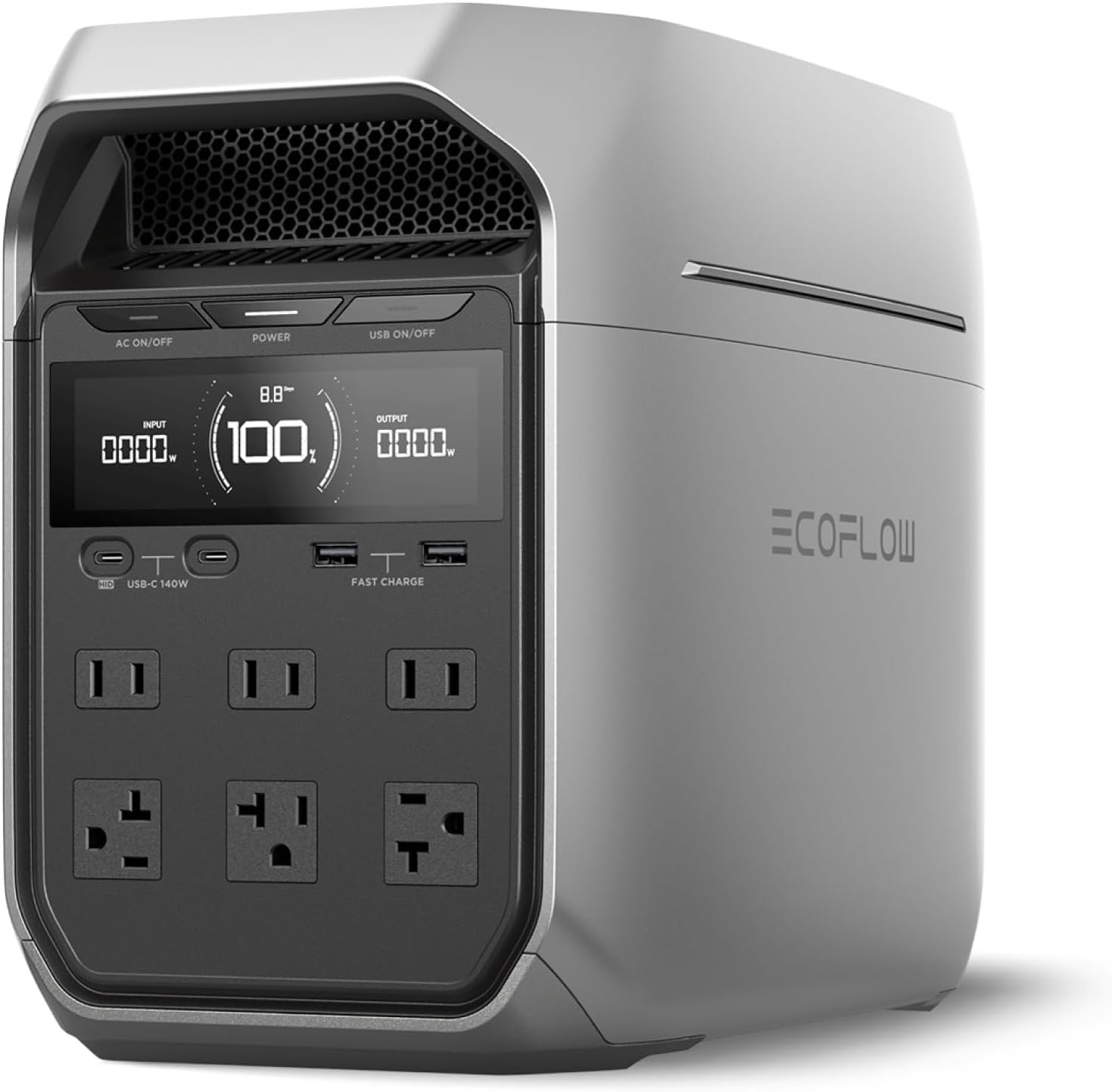
The DELTA 3 Plus hits the sweet spot that most homeowners actually need: enough capacity to run essentials through an overnight outage, a recharge so fast it’s ready again before dinner, and expansion options if your needs grow.
- 1,024Wh LiFePO4 capacity : runs a full-size refrigerator roughly 10-14 hours, or a CPAP + Wi-Fi + phone charging for days
- 1,800W output (2,700W X-Boost) handles fridges, microwaves, and space heaters without complaint
- The recharge speed is the headline: 0-100% in 56 minutes via wall outlet. During multi-day outage events where power flickers on and off, this is the feature you’ll be grateful for
- 20ms UPS switchover : fast enough that desktop computers and networking gear won’t blink
- Expands with extra DELTA 3-series batteries up to ~5kWh
- 2,048Wh capacity, expandable to 8,192Wh with B230/B300 batteries : genuine multi-day essential coverage
- 2,400W output runs nearly any household appliance short of an electric dryer
- 1,200W solar input is class-leading : a full solar recharge in about 2 hours of good sun, which matters enormously if the grid stays down
- Powers a full-size fridge for 24+ hours per charge in real-world use
- 2,042Wh LiFePO4 + 2,200W output across three AC ports covers all household essentials
- ~1.7 hour full recharge via wall outlet
- USB-C PD 100W for modern laptops and phones
- Jackery’s app and warranty support have a solid track record
- 1,264Wh expandable up to 5kWh with add-on battery packs : unusual flexibility at this price
- 2,000W output comfortably runs refrigerators, freezers, and medical devices
- Charges from wall, car, or solar panels
- Runs a full-size fridge for days, not hours
- ~1.5-hour recharge despite the enormous capacity
- LiFePO4 chemistry only. Older lithium-ion units lose usable capacity years sooner. Every pick here uses LiFePO4 cells rated for 3,000-5,000+ cycles : a decade of realistic backup duty.
- Capacity matched to real outages. We sized each recommendation to actual scenarios: fridge + phone + Wi-Fi (1-1.5kWh), those plus lights and a microwave for days (2kWh+), and whole-home essentials (5kWh).
- Recharge speed. A dead backup battery protects nobody. Units that refill in under 2 hours can capitalize on partial grid restoration or brief generator time.
- Expandability. Buying a unit that grows with extra batteries beats replacing a too-small one later.
- Jackery vs EcoFlow vs Bluetti: Which Power Station Brand Wins?
- What Size Charge Controller Do You Need for a 100W Panel?
- How Many Solar Panels Does It Take to Run a Refrigerator?
The honest downside: at base capacity it’s smaller than every other pick here. If your outages routinely run multiple days, buy it with an expansion battery from day one : or step up to the Bluetti below.
Best for: apartments, condos, and most suburban homes covering essentials through typical 4-24 hour outages.
💪 Bluetti AC200L : Best High-Capacity Value
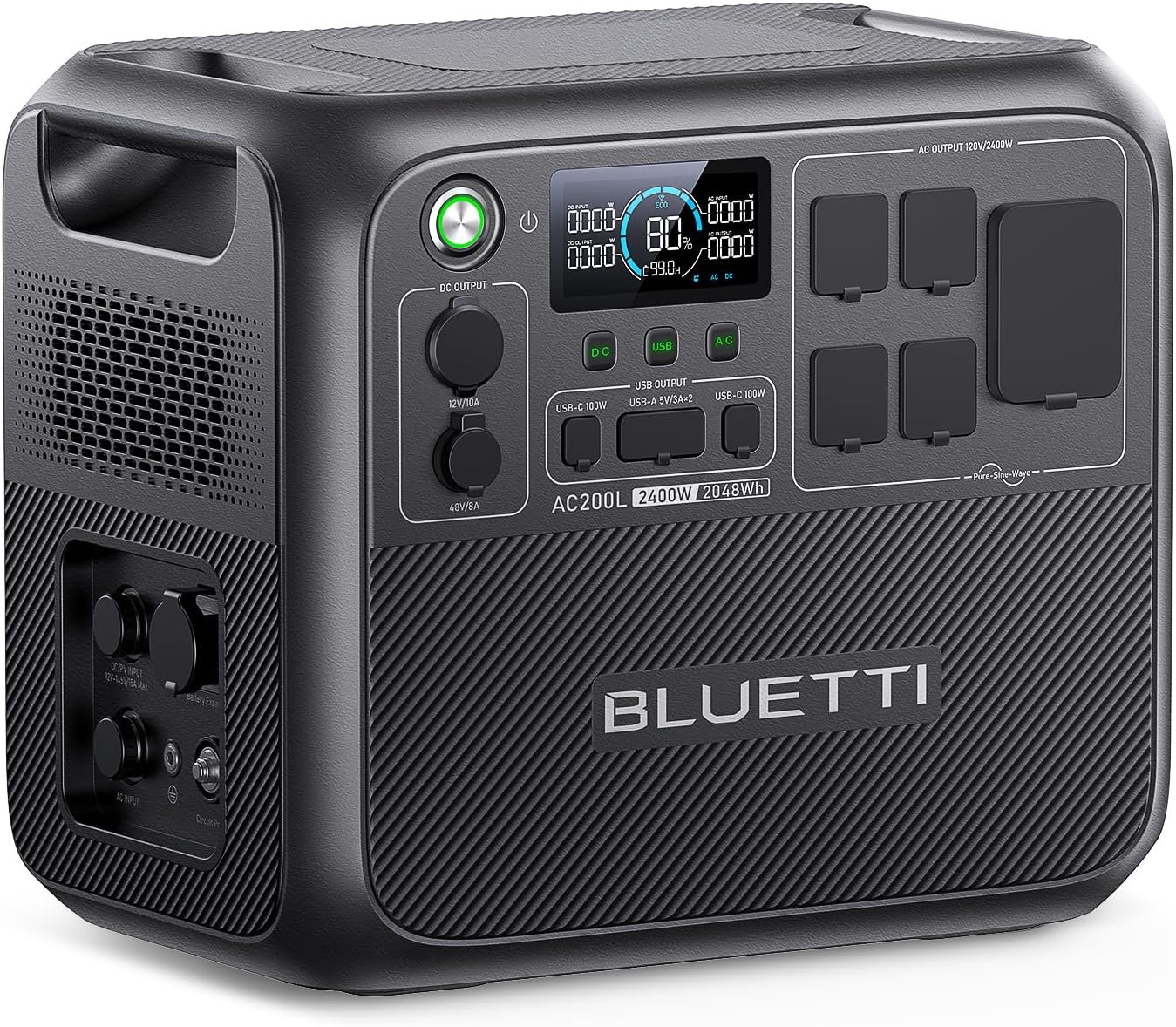
If the DELTA 3 Plus is “enough,” the AC200L is “plenty” : and it delivers its 2,048Wh at a price that undercuts comparably-sized rivals by $100-200.
The honest downside: it’s heavy (62 lbs) and the wall-charge speed trails EcoFlow’s. It’s built like a stay-at-home backup unit, not something you’ll toss in the trunk every weekend.
Best for: homes with frequent or long outages, RVers who want serious capacity, and anyone pairing with solar panels.
🪶 Jackery Explorer 2000 v2 : Best Lightweight 2kWh Unit
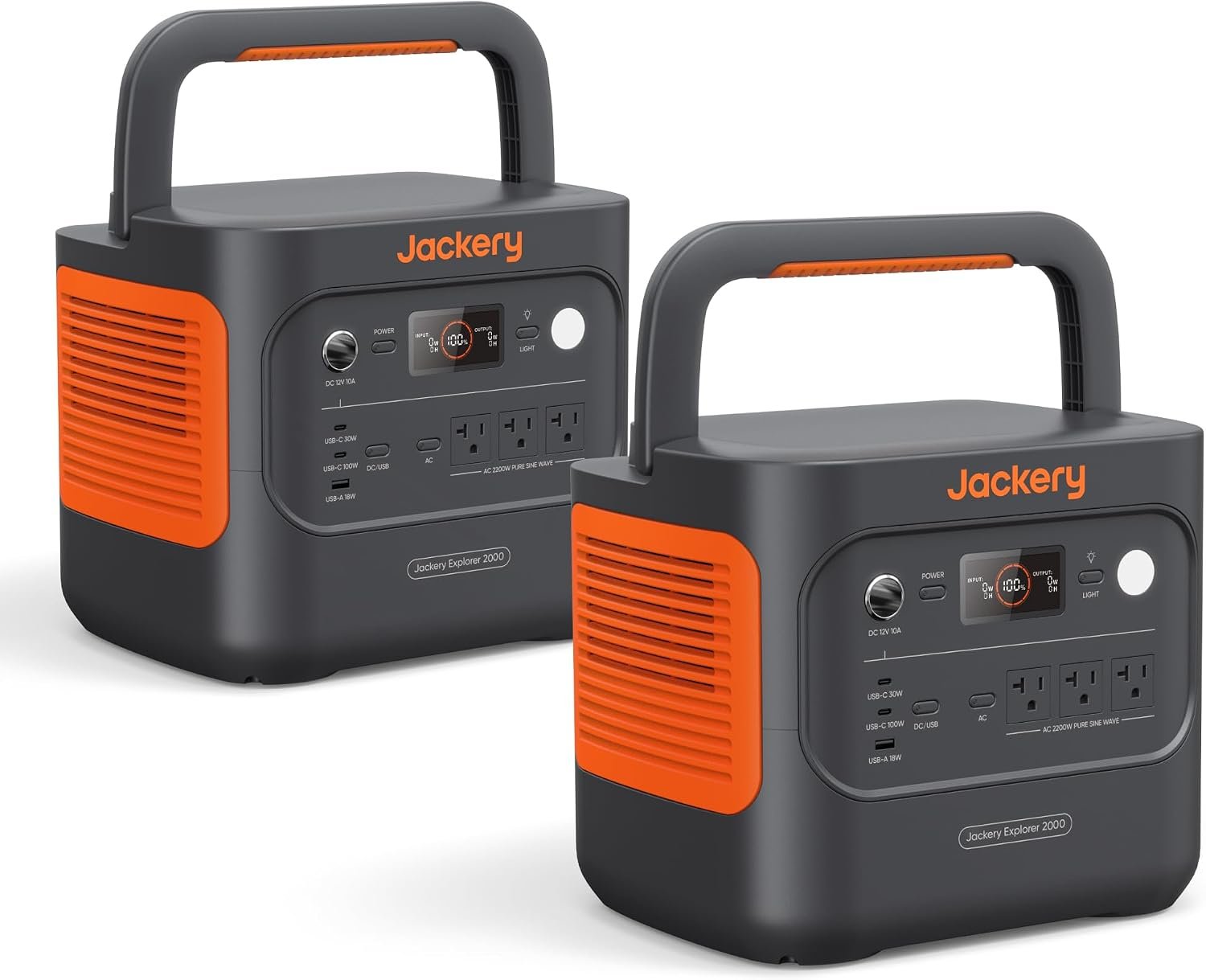
At 39.5 lbs, the Explorer 2000 v2 packs 2,042Wh into roughly two-thirds the weight of comparable units : the lightest way to own 2kWh of backup power.
The honest downsides: no expansion (what you buy is what you get), and solar input maxes out lower than the Bluetti’s. Also note some early buyers report app connectivity quirks.
Best for: people who want serious backup capacity but may need to carry the thing : upstairs apartments, seniors, or shared use between home and campsite.
🌱 Jackery Solar Generator 1000 Plus : Best Starter Home Backup
The smartest entry point into home backup power. It goes on sale regularly, and you get LiFePO4 chemistry, true 2,000W output, a 200W charging panel in the box, and room to grow.
The honest downside: at base capacity it’s sized for overnight outages, not multi-day events : unless you add battery packs later, which is exactly what makes it a good starter.
Best for: first-time buyers who want dependable coverage now and expansion later.
🏠 OUPES Mega 5 : Best Whole-Home Budget Beast
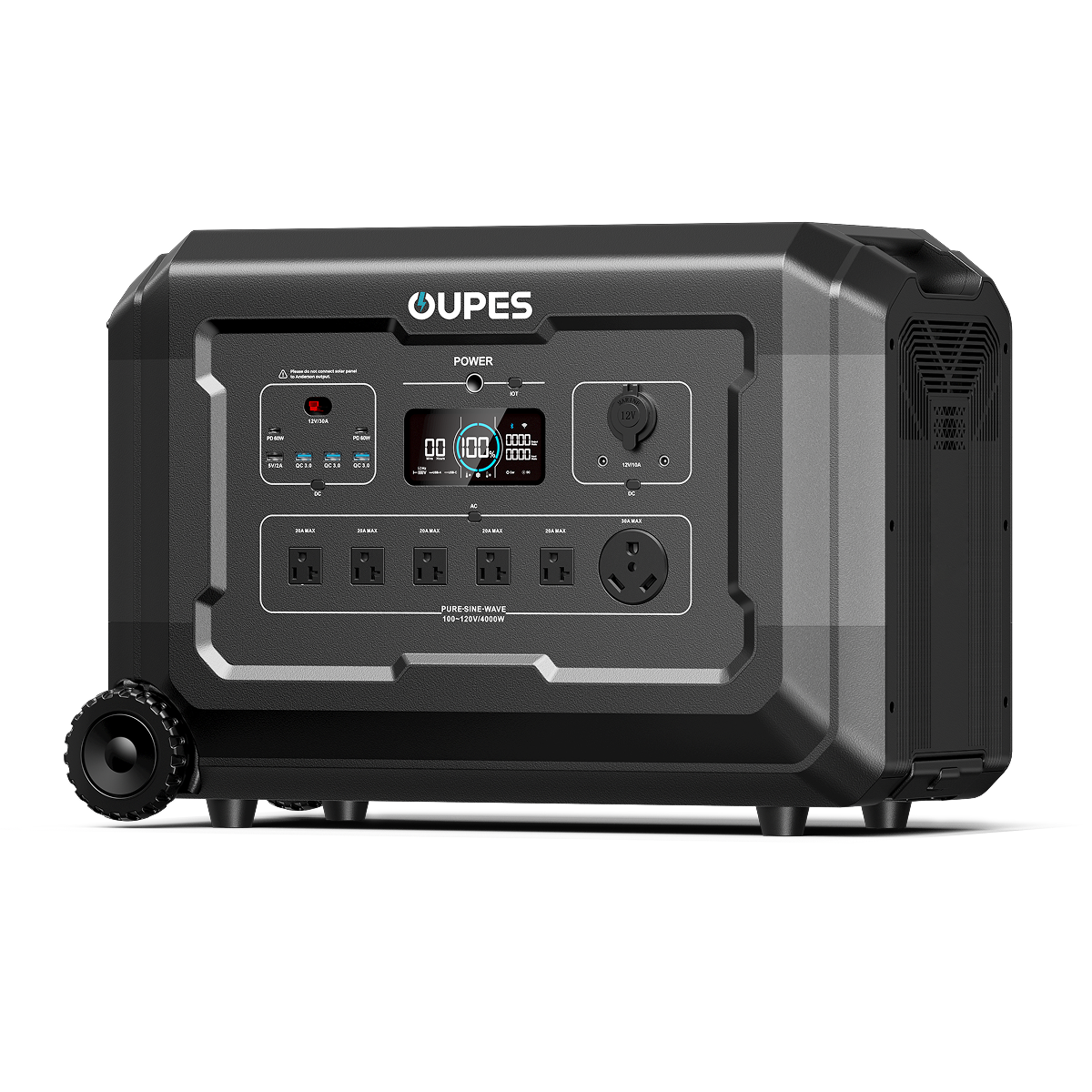
For the price of a mid-range unit elsewhere, OUPES delivers 5kWh-class hardware: 5,040Wh LiFePO4 capacity, 4,000W continuous output, expansion to ~15kWh, a true UPS function, and a real 30A outlet for hooking into transfer switches.
The honest downside: OUPES is a younger brand than Jackery or EcoFlow, and long-term reliability data is thinner. OutdoorLife’s testers called it great value “if you’re willing to take a small gamble.” We think that’s fair : the spec sheet is spectacular; the track record is still being written.
Best for: budget-focused buyers wanting maximum watt-hours per dollar for extended outages.
How We Chose These Power Stations
Four criteria separated the picks above from the pack:
How to Size a Power Station for Your Home
Add up the wattage of what you must run simultaneously, then estimate hours:
| Appliance | Typical Draw | Notes |
|---|---|---|
| Full-size refrigerator | 150-400W running | Cycles on/off; ~1-1.5kWh/day |
| CPAP machine | 30-60W | Critical for many buyers |
| Wi-Fi router + modem | 10-20W | Cheap peace of mind |
| LED lights (whole room) | 20-50W | |
| Microwave | 900-1,500W | Short bursts only |
| Window AC (small) | 500-900W | Big capacity driver |
Quick math: a 1,000Wh unit ≈ one full day of fridge-only operation. A 2,000Wh unit ≈ two days of fridge + devices. Double for safety margin, since battery ratings assume ideal conditions.
FAQ
How big a power station do I need to run a refrigerator?
A full-size fridge needs about 1-1.5kWh per day. Any unit here handles it; the 1,000Wh-class models give roughly a day, while 2,000Wh+ units cover 2+ days.
Can a portable power station run a house?
Not everything at once : but it can run the essentials indefinitely if paired with solar recharging, or for days if it’s a 5kWh-class unit like the Mega 5.
Are portable power stations worth it vs. a gas generator?
Power stations are silent, fume-free, indoor-safe, and maintenance-free : but cost more per watt-hour. For apartment dwellers and short-to-medium outages they win; for multi-week disasters, generators still rule.
Do portable power stations work during winter outages?
Yes, but cold temporarily cuts lithium battery capacity by 10-25%. Store yours indoors; LiFePO4 chemistry (all our picks) handles temperature swings better than older chemistries.
How long will a portable power station last?
Quality LiFePO4 units retain ~80% capacity after 3,000+ cycles : realistically 8-10 years of occasional-outage use.
Related Reading
Last updated: August 2026. Prices and availability verified at publication but change frequently.