Best Solar Generators for Home Backup (2026)
By Rowan Watts
Affiliate Disclosure: This post contains affiliate links, including Amazon Associates links. If you buy through our links, we may earn a commission at no extra cost to you. As an Amazon Associate, we earn from qualifying purchases.
A solar generator is the cleanest way to ride out a power outage: a battery, an inverter, and a charge controller in one box, recharged by the sun instead of gasoline. The best solar generator for home backup in 2026 is not one single product. It is the unit whose capacity, charging speed, and solar panel situation match the outage you are actually planning for. A two-person household keeping a refrigerator, router, lights, and phones alive needs far less than a family trying to hold a well pump or a sump pump through a three-day ice storm.
Every pick below is a LiFePO4 (lithium iron phosphate) unit in the 2kWh class or larger, because that chemistry has become the default for home backup and survives thousands of cycles before meaningful degradation. We verified capacities, output ratings, and charging claims against current Amazon listings and manufacturer pages, and we note the honest tradeoffs of each. If you are torn between the two biggest brands in this category, our head-to-head Jackery vs EcoFlow vs Bluetti comparison covers the platform-level differences in more depth.
Quick Picks: Best Solar Generators for Home Backup at a Glance
| Product | Best For | Capacity | Output | Battery |
|---|---|---|---|---|
| EcoFlow DELTA 3 Max with 220W Bifacial Panel | Complete kit with panel included | 2,048Wh | 2,400W (3,400W X-Boost) | LiFePO4 |
| Jackery Explorer 2000 v2 | Lightest 2kWh unit, panel optional | 2,042Wh | 2,200W AC | LiFePO4 |
| Anker SOLIX C2000 Gen 2 with 400W Bifacial Panel | Fastest recharge in class | 2,048Wh | 2,400W (4,000W peak) | LiFePO4 |
| Bluetti AC200L | Most expandable, 30A RV output | 2,048Wh (to 8,192Wh) | 2,400W (3,600W lifting) | LiFePO4 |
| OUPES Mega 5 Kit with 240W Panels and Extra Battery | Biggest capacity per dollar | 10,080Wh | 4,000W | LiFePO4 |
The 5 Best Solar Generators for Home Backup
1. EcoFlow DELTA 3 Max with 220W Bifacial Panel: Best Kit with a Panel Included
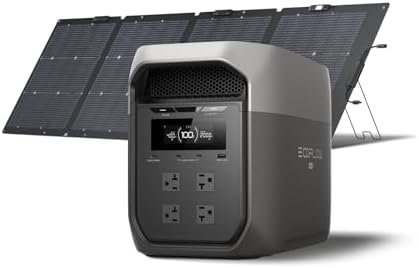
Most solar generator kits sold with a panel pair a modest battery with an undersized panel. This one does not. The DELTA 3 Max carries 2,048Wh of LiFePO4 capacity with 2,400W of continuous AC output, and EcoFlow’s X-Boost mode stretches that to 3,400W for resistive loads like a space heater or an electric kettle. The included 220W bifacial panel is the same dual-glass design EcoFlow sells separately, and its rear face harvests light reflected off pavement, snow, or a light-colored wall, which adds real watt-hours on bright days when the unit is running your refrigerator.
EcoFlow’s calling card is charging speed, and it holds here: the unit goes from 0 to 80 percent in about 68 minutes on a standard outlet and tops off to full shortly after, and the 10ms UPS switchover bridges sensitive electronics through the moment the grid drops. At about 44.8 pounds it is one of the lighter 2kWh units, so you can carry it from the garage to the room that needs power. The honest caveats: the bundled panel will not refill 2,048Wh quickly on its own, so cloudy-week outages still lean on wall charging, X-Boost output is rated for resistive rather than motor loads at the top of the range, and EcoFlow’s app-connected ecosystem is more complex than some buyers want to manage mid-outage.
Pros
- A genuine 220W bifacial panel included in the box
- 0 to 80 percent charge in 68 minutes with 10ms UPS switchover
- 3,400W X-Boost covers high-draw appliances most 2kWh units cannot
- One 220W panel refills this battery slowly; cloudy outages need wall power
- X-Boost output suits resistive loads better than heavy motor starts
- App-based controls add a learning curve when you least need one
- Lightest 2kWh LiFePO4 unit in its class at 39.5 pounds
- About 1.7 hour AC recharge with about 20ms UPS switchover
- 100W USB-C PD output charges laptops without an adapter
- 400W solar input cap makes panel-only recharging slow
- Limited expansion path beyond the base battery
- Lighter build is less rugged for frequent transport
- Up to 58 minute full recharge using combined AC and solar input
- 400W bifacial panel included, the largest in any kit here
- 4,000W peak output starts hard loads like well pumps and compressors
- Headline charge speed needs wall power and sun together
- Expansion ceiling of about 4kWh limits multi-day autonomy
- The 400W panel is large and unwieldy in tight outdoor spaces
- Expandable from 2,048Wh to 8,192Wh with Bluetti expansion batteries
- NEMA TT-30 30A outlet powers an RV or a hardwired inlet directly
- Up to 2,400W AC input with about 45 minutes to 80 percent
- Heavy enough that one person should not be moving it upstairs
- Reaching the full 8,192Wh means buying several costly batteries
- Real-world usable capacity tends to land below rated figures
- 10,080Wh of LiFePO4 storage in a single kit at a strong price per watt-hour
- 4,000W output with 16 ports covers whole-room loads at once
- About 1.3 hour recharge with combined AC and solar input (about 3 hours on wall power alone) and 480W of solar included
- Younger brand with a less proven support and warranty track record
- Main unit is about 112 pounds and effectively stationary
- 480W of panels refills a 10,080Wh bank slowly in bad weather
- Jackery vs EcoFlow vs Bluetti: the platform-level rivalry behind most of this guide.
- How to Size Your Home Battery System: the load-sheet method behind every capacity number here.
- What Solar Panels You Need to Run a Refrigerator: real-world panel sizing for the most common outage load.
Cons
Check Price on Amazon: EcoFlow DELTA 3 Max with 220W Bifacial Solar Panel
2. Jackery Explorer 2000 v2: Best Lightweight, Panel-Optional 2kWh Unit
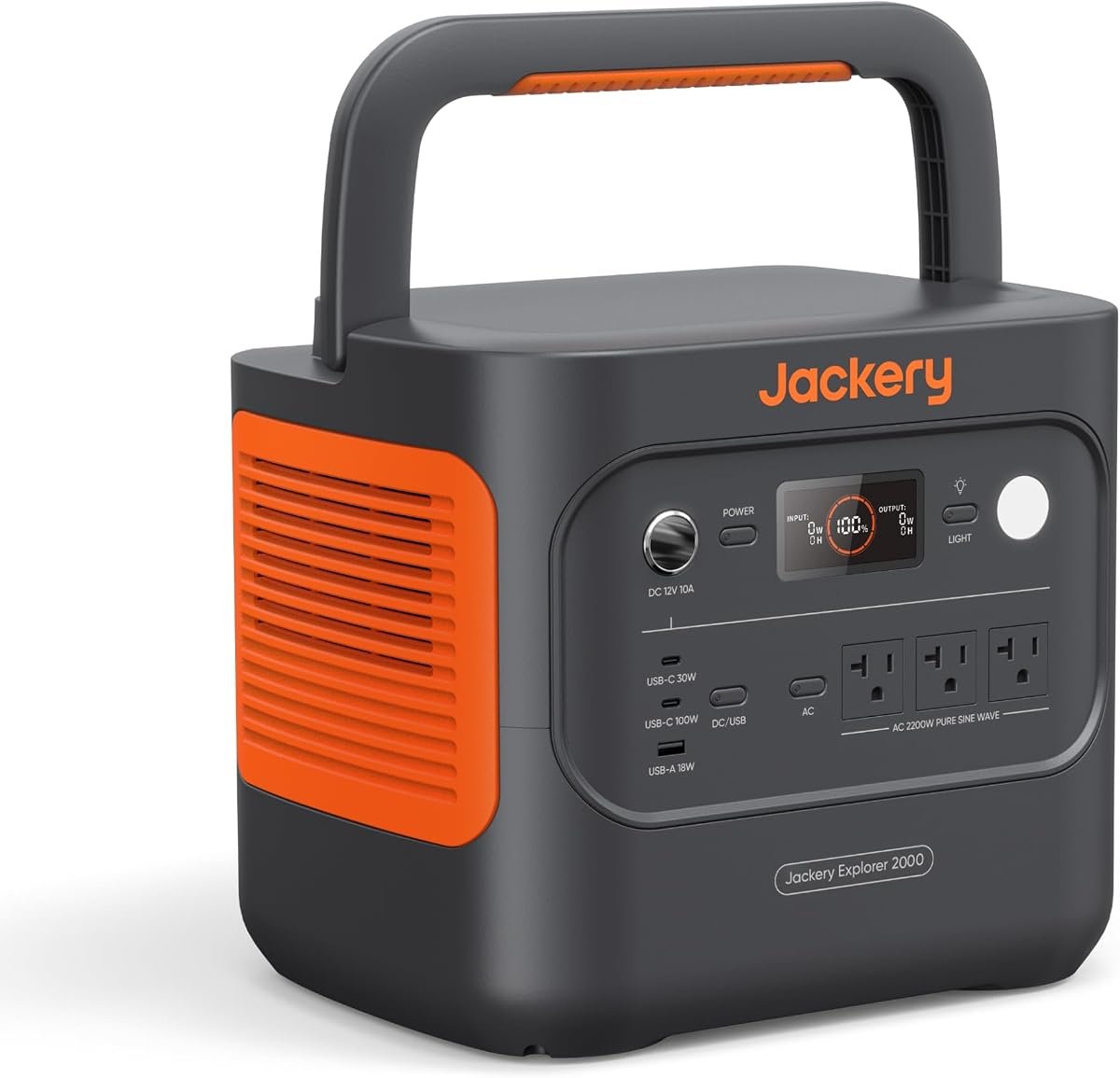
Weight is the spec nobody appreciates until an outage actually happens and the unit has to be hauled out of a closet. The Explorer 2000 v2 is the lightest 2kWh-class LiFePO4 station we know of at 39.5 pounds, and its fold-down handle design makes it the one unit in this guide a single person can comfortably carry up stairs. Capacity is 2,042Wh with a 2,200W pure sine wave inverter, which runs a refrigerator, a freezer, lights, a router, and device charging together without drama, and a 100W USB-C PD port handles a laptop directly.
Jackery sells this unit with the panel optional, which we think is the right call for a home backup buyer: wall charging refills it in about 1.7 hours, faster than most rivals in this class, and an about 20ms UPS mode covers electronics between grid failure and battery takeover. The tradeoffs are real, though. Maximum solar input is capped at 400W, so a full recharge from panels alone takes the better part of a day with two 200W panels in good sun. Expansion is limited compared with Bluetti or OUPES, and the plastic-heavy build, while light, feels less rugged than the rubberized competition if you plan to move it in and out of a vehicle.
Pros
Cons
Check Price on Amazon: Jackery Explorer 2000 v2 Portable Power Station
3. Anker SOLIX C2000 Gen 2 with 400W Bifacial Panel: Fastest Recharge in the Class
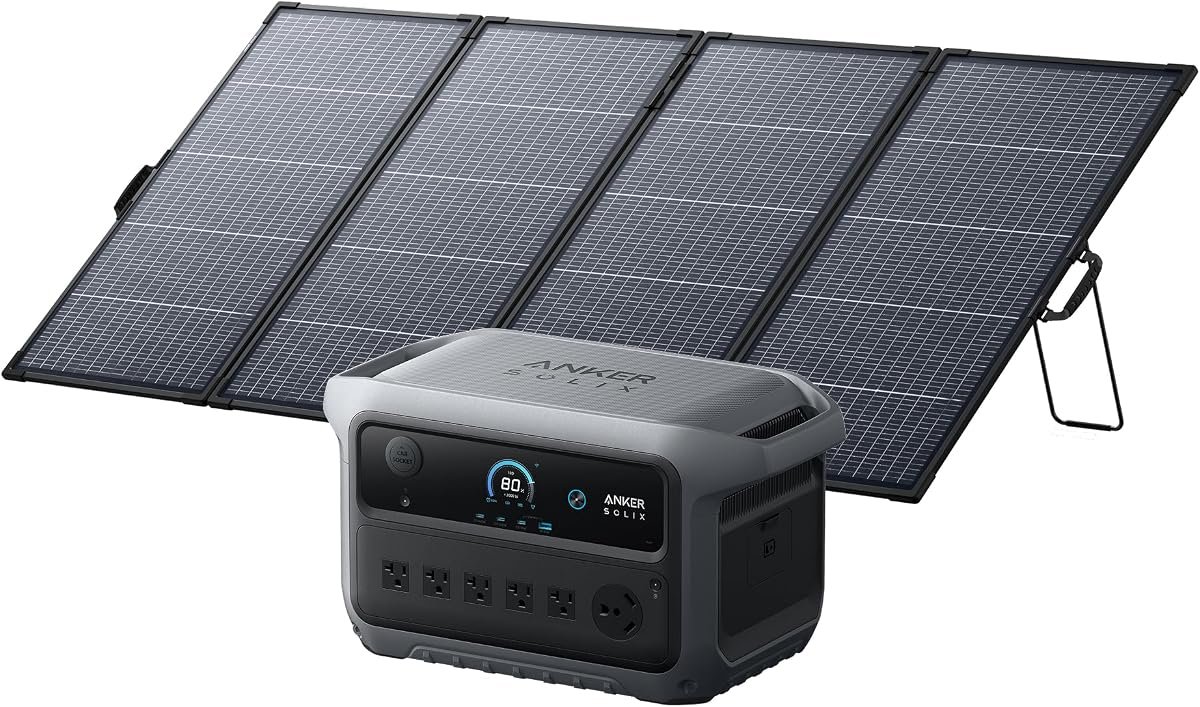
If your outage plan depends on refilling between utility shutoffs or rolling blackouts, the C2000 Gen 2 is the fastest way back to full. Anker combines up to 1,800W of AC input with solar input for as much as 2,600W total, which takes the 2,048Wh battery from empty to full in 58 minutes under favorable conditions. In a morning-off, afternoon-on blackout pattern, that speed means the difference between a battery that is ready when the grid drops again and one that is still catching up.
The kit version bundles a 400W bifacial panel, the largest factory panel included with any unit in this guide, so solar recharging is not an afterthought. Output is 2,400W continuous with a 4,000W peak that handles compressor and motor starts well, a 140W USB-C port serves modern laptops, and Anker quotes a 9W idle draw, which stretches a single charge meaningfully if the unit sits between uses. The downsides: the 58 minute claim requires wall power plus good sun at the same time, not panels alone, the base unit tops out around 4kWh even with Anker’s expansion battery, and the bundled 400W panel is a large, awkward thing to position and reposition on a small patio.
Pros
Cons
Check Price on Amazon: Anker SOLIX C2000 Gen 2 with 400W Bifacial Panel
4. Bluetti AC200L: Most Expandable with 30A RV Output
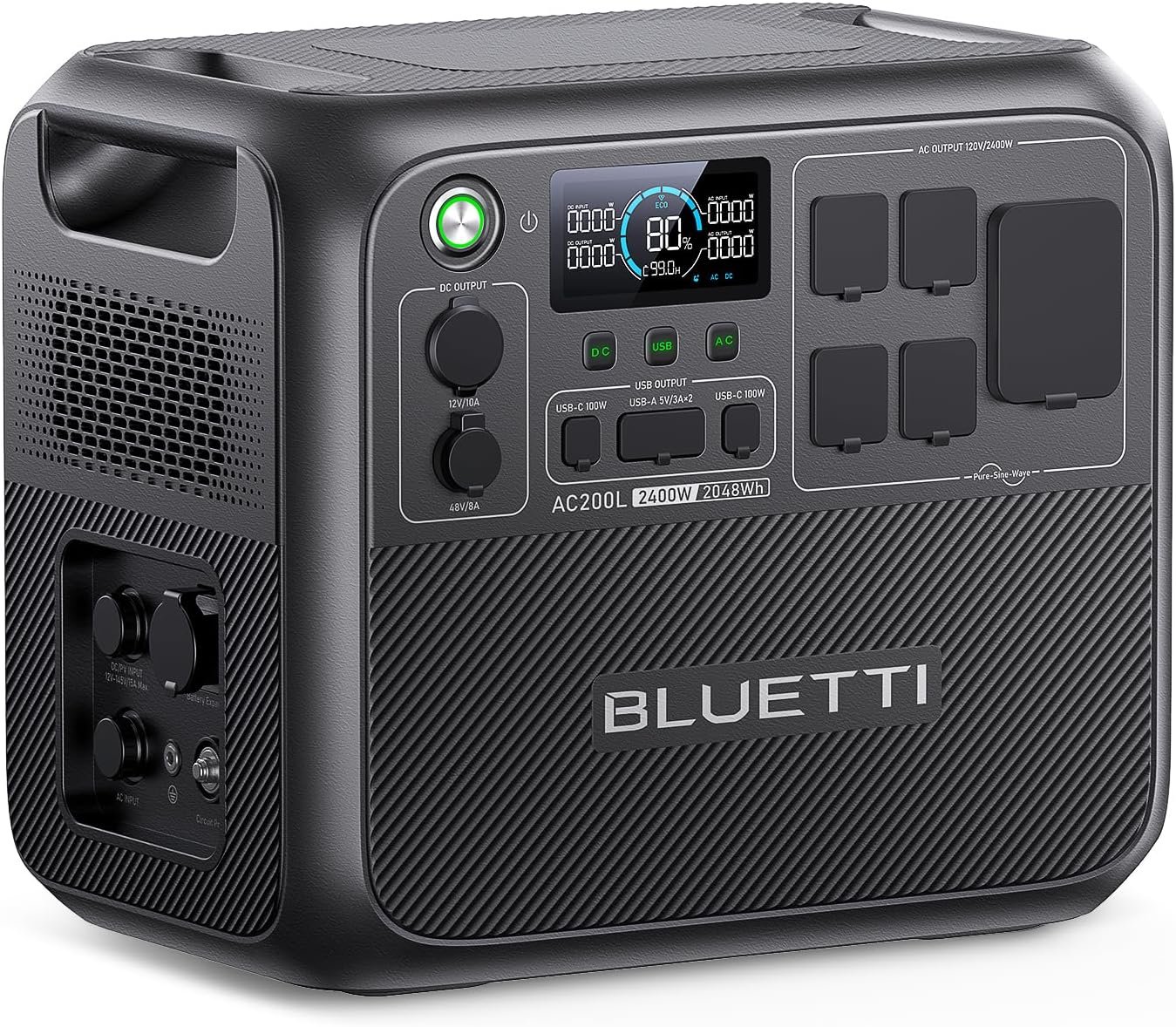
The AC200L is the pick for buyers who want a backup system that grows with the threat. The base unit holds 2,048Wh with a 2,400W inverter and a 3,600W power lifting mode for heavy appliances, and Bluetti’s expansion batteries take the same unit to 8,192Wh, which is genuine whole-essential-circuit territory for a multi-day outage. It also carries a NEMA TT-30 30A RV outlet, so it can feed a travel trailer’s shore-power input directly or run a hardwired transfer setup through an appropriate inlet. Two other picks here (the Anker and the OUPES) also offer TT-30 ports, but Bluetti’s is rated for the full 30 amps, while Anker’s TT-30 connector tops out at 20A, so the AC200L is the one that runs heavier trailer loads unattended.
Bluetti also fixed the brand’s historic weak point, charging speed: the AC200L accepts up to 2,400W of AC input and reaches 80 percent in about 45 minutes, so even the expanded bank refills quickly when the grid blinks back. The honest cons: at roughly 62 pounds it is a two-person lift, the maximum 8,192Wh figure requires buying multiple expansion batteries at real money each, and Bluetti’s rated capacity and cycle-life claims have historically been more optimistic than EcoFlow’s or Anker’s independent test results, so budget for a little less usable energy than the brochure says.
Pros
Cons
Check Price on Amazon: Bluetti AC200L Portable Power Station
5. OUPES Mega 5 Kit with 240W Panels and Extra Battery: Biggest Capacity Value Kit

Per stored watt-hour, nothing else in this guide comes close. The kit pairs the Mega 5, a 5,040Wh LiFePO4 unit rated at 4,000W output, with a B5 expansion battery for 10,080Wh total, and adds OUPES 240W solar panels for a 480W solar input path. Ten kilowatt-hours is a different class of backup: it holds a refrigerator, freezer, furnace fan, well pump, lights, and network gear through a multi-day outage with daylight recharging on top, and OUPES rates the cells for more than 3,500 cycles to 80 percent.
Charging is respectable for the size, with OUPES advertising a combined AC-plus-solar recharge in as little as about 1.3 hours for the base Mega 5 (AC-only input is 1,800W, closer to three hours on the wall alone); the same 1,800W wall input refills the expanded 10,080Wh kit in roughly twice that time. It also carries a 16-port output array that includes enough AC outlets to plug in several rooms at once. The cons are the ones this price class always carries. OUPES is a much younger brand than EcoFlow, Anker, or Bluetti, with a thinner service network and less proven long-term warranty support, and the kit is heavy: the main unit alone weighs about 112 pounds, so it is a stay-put installation, not a grab-and-go. The included 480W of solar is a trickle against a 10,080Wh bank, so multi-day cloudy outages will still need generator or grid input to stay topped up.
Pros
Cons
Check Price on Amazon: OUPES Mega 5 Solar Generator Kit with 240W Solar Panels and Extra Battery
How We Chose
We limited this guide to LiFePO4 units of 2,048Wh or more, the practical floor for refrigerator-plus-essentials home backup, and we excluded gasoline inverter generators and permanently installed whole-home systems, which solve a different problem. Capacities, output ratings, charge times, and expansion limits were verified against current Amazon listings and manufacturer specification pages in November 2026, and we discarded any claim we could not source.
Ranking weighted four things. Capacity and output determine what an outage actually feels like, so units that could run a modern refrigerator overnight with room to spare cleared the bar. Recharge speed matters because a backup battery is only as good as its next refill, and wall-plus-solar input of 2,000W or more separated the modern units from the older designs. Expandability and outlet flexibility, especially 30A RV output, earned extra credit. Finally, honest cons: every unit here has real weaknesses, listed, and none of the picks earned its slot on price alone.
How to Choose a Solar Generator for Home Backup
Size capacity to your critical loads, not your whole house. List what must stay powered: a modern refrigerator averages roughly 50W and runs about 1,200Wh over a full day with compressor cycling, LED lights and a router add another 500 to 700Wh, and a CPAP adds about 480Wh per night. A 2kWh unit covers roughly a day of that combined load, or closer to two days of refrigerator alone, which is why every pick here starts at 2,048Wh and why expansion matters for longer events. Our guide on how to size your home battery system walks through the load-sheet math step by step.
Check charging input before charging speed claims. A 58 minute recharge means nothing if you only have 400W of panel in November drizzle. Look at three numbers: maximum AC input, maximum solar input, and whether the unit accepts both simultaneously. The Anker and Bluetti units here take 1,800 to 2,400W from the wall, which is the fastest refill insurance available, while solar input ceilings as low as 400W (Jackery) and 500W (EcoFlow) show why panel-only autonomy is the hardest spec to get in the 2kWh class.
Match the output to your hardest load. Continuous wattage covers running loads; peak or surge wattage covers starts. Refrigerators, sump pumps, and well pumps all spike at startup, sometimes to three times their running draw, so a 2,400W unit with a 3,600 to 4,000W peak handles motor loads that a flat 2,200W inverter may trip on. If you want the 30A RV outlet for a trailer or a hardwired inlet, the Bluetti AC200L is the strongest option, since its TT-30 output carries the full 30 amps where the Anker’s tops out at 20A.
Prefer LiFePO4 and a real expansion path. Lithium iron phosphate cells survive 3,000 to 4,000 cycles to 80 percent, which is a decade of weekly use or decades of rare outages, and every unit here uses that chemistry. If multi-day autonomy is your goal, a base unit with a documented expansion battery line, like Bluetti’s or OUPES’, beats buying a second complete unit later. And set expectations correctly: no portable solar generator in this class runs central air conditioning or a full electric panel, so treat the category as essential-circuit coverage rather than whole-home replacement.
Frequently Asked Questions
What size solar generator do I need to run a refrigerator during an outage?
A modern refrigerator draws about 50W on average with compressor cycling, which is roughly 1,200Wh per day. Any 2kWh-class unit in this guide runs one for around 33 hours with careful loading, and two full days if the door stays shut and the compressor cycles normally. Add a freezer, lights, and a router and plan on refilling daily from wall power or doubling capacity.
Can a solar generator power a house during a multi-day outage?
Partially, and only with realistic expectations. A single 2kWh unit covers essentials: refrigerator, lights, phones, router, and a furnace fan. Whole-house coverage, meaning central air, an electric water heater, and an electric range, needs 10kWh or more plus thousands of watts of solar or a generator fallback, which is what the OUPES kit approaches but what permanently installed systems do better.
Is LiFePO4 better than other batteries for home backup?
Yes for this use. LiFePO4 chemistry is thermally stable, tolerates being held at full charge, and survives 3,000 to 4,000 cycles to 80 percent capacity, three to five times the usable life of older NMC lithium packs. Since a backup unit spends most of its life sitting charged on a shelf, cycle life and calendar stability matter more than weight savings, and LiFePO4 wins both tradeoffs for stationary home use.
How long do solar panels take to recharge a 2kWh power station?
With the 400W to 480W solar inputs typical of this class, figure four to six hours of strong direct sun per 1,600Wh of realistic harvest, and expect half that in winter or heavy overcast. Panel rating and delivered watt-hours are not the same thing; our guide on solar panels for running a refrigerator shows the real-world sizing math for the most common outage load.
Do solar generators need to be charged before an outage hits?
Yes, and kept near full. LiFePO4 cells tolerate sitting at 100 percent far better than other lithium chemistries, so the correct standby practice is to top the unit up monthly, leave it plugged into a wall outlet or a permanent panel feed, and test the UPS switchover twice a year so you know the refrigerator actually stays powered when the grid drops.
Tags: solar-energy, home-backup-power, emergency-power, home-battery-backup, energy-storage, ecoflow, jackery