Advantages and Disadvantages of Solar Energy in 2026
By Rowan Watts | Updated September 2026
This post contains affiliate links. As an Amazon Associate, ENERGY FOR THE TAKING earns from qualifying purchases at no extra cost to you.
Solar energy is no longer a niche experiment. Panel prices have fallen for another straight year, 25 to 30 percent below what they cost when this article was first written in 2022, and lithium iron phosphate (LFP) batteries have made it practical to store the power you generate instead of watching it evaporate after sunset. At the same time, the rules of the game have changed: the 30% federal residential solar tax credit expired at the end of 2025, and several utilities have trimmed their net metering programs.
So the honest answer to “is solar worth it in 2026?” is more nuanced than a yes or no. The economics are now driven by cheap hardware, state incentives, utility rebates, and how much your utility pays you for excess power, rather than by a federal tax break that no longer exists.
This guide walks through the advantages and disadvantages of solar energy as they stand in 2026, with real numbers, honest downsides, and a low-risk way to get started for under $500 if you are not ready for a rooftop array. If you are brand new to the topic, our solar energy for beginners guide covers the fundamentals first.
The Advantages of Solar Energy in 2026
1. Panels cost less than ever
The single biggest advantage of going solar in 2026 is that hardware has never been cheaper. Monocrystalline panels routinely sell for well under $1 per watt at retail, compared with roughly $1.25 to $1.50 per watt a few years ago. A 200W panel that cost well over $200 in 2022 now often sells for under $200, with name-brand panels like Renogy’s 200W commonly landing around $180. Balance-of-system components like inverters and charge controllers have followed the same curve.
Installation labor has not dropped as fast as hardware, but DIY-friendly equipment means a handy homeowner can build a meaningful system for a fraction of a quote from a full-service installer. Our DIY solar panel installation guide walks through what that involves.
2. It slashes or eliminates your electric bill
Once the system is installed, sunlight is free. A right-sized grid-tied array can offset most or all of a home’s annual consumption, which in most states means saving somewhere between $100 and $250 per month at current residential rates. Because utility rates keep climbing, every kilowatt-hour you generate yourself is a hedge against future price increases. Even if you cannot offset the whole bill, cutting it in half compounds into thousands of dollars over the life of the system.
3. LFP battery storage finally makes sense
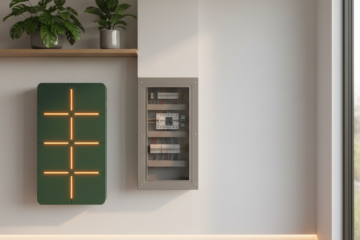
This is the biggest upgrade to the solar value proposition since 2022. Lithium iron phosphate (LFP) batteries have gotten dramatically cheaper and safer than the older lithium-ion chemistries. LFP cells tolerate thousands of charge cycles, do not suffer the same thermal runaway risk, and now cost a fraction of what storage did when panels were the expensive part of the equation.
Pairing panels with an LFP battery bank changes the math in three ways:
- You use your own solar power at night instead of buying it back from the utility.
- You keep essential loads (fridge, router, lights, medical devices) running through outages.
- In states where net metering has been cut back, storage lets you time-shift your generation instead of selling excess power at a low rate.
- State tax credits and rebates (California, New York, Massachusetts, and others still offer meaningful programs).
- Utility rebates and performance incentives.
- Net metering and net billing programs (where they survive).
- Financing and lease arrangements that trade some savings for zero upfront cost.
- Panel prices: down another 25 to 30 percent.
- Federal tax credit: expired December 31, 2025.
- Storage: LFP battery costs fell enough to make panel-plus-battery the default recommendation, not a luxury.
- Net metering: weakened in several states; self-consumption with storage is the new strategy.
- Net result: hardware economics improved, policy economics got worse, and the smart play in 2026 is to stack state and utility incentives and size your system around self-consumption.
We break down sizing and options in our battery energy storage systems guide.
4. Energy independence and blackout protection
Generating electricity at your own property reduces dependence on the grid and on fossil fuel price swings. In regions prone to wildfires, ice storms, hurricanes, or an aging grid, that reliability has real value. A modest panel-plus-battery setup keeps a household running through a multi-day outage more quietly and without fuel runs, unlike a gas generator.
5. Clean, renewable, and low-maintenance
Solar generates zero emissions at the point of use, and the fuel source will outlast every one of us. Panels have no moving parts, so maintenance amounts to occasional cleaning and an inspection every year or two. Most manufacturers warranty output at around 80% or better after 25 years (typically 80 to 88% depending on the brand), and real-world field data shows many panels degrading slower than their warranty assumes.
6. It raises property value and works almost anywhere
Studies consistently find that owned solar systems add to resale value, since buyers effectively purchase decades of discounted electricity. And because panels now come in flexible, lightweight, and portable formats, solar works where it never did before: vans, cabins, boats, balconies, and rentals that will never see a rooftop array.
The Disadvantages of Solar Energy in 2026
An honest pros and cons list has to lead with the biggest change since this article was first published.
1. The 30% federal tax credit is gone
The federal residential solar tax credit (Section 25D) covered 30% of the cost of a home solar installation for years. It expired on December 31, 2025. If you install solar in 2026, there is no federal tax credit waiting for you at tax time.
That is a genuine con, and it changes payback periods. A $20,000 installation that effectively cost $14,000 after the credit in 2025 now costs $20,000, all in. Payback periods have stretched by several years in most states as a result.
What still exists in 2026:
Check the Database of State Incentives for Renewables and Efficiency (DSIRE) and your utility’s website before assuming any incentive still applies. If an article or installer quotes you the “30% federal credit,” they are out of date.
2. Net metering is getting weaker
Net metering, the policy that credits you the full retail rate for excess power you export, is being scaled back in several major markets. California’s shift to net billing, which pays closer to wholesale rates, is the highest-profile example, and other states are watching closely.
The practical consequence: exporting power to the grid is worth less than it used to be, which strengthens the case for battery storage. Solar alone is still worth it in most places, but the self-consumption strategy (use your own power, store the surplus) now beats the old export-everything strategy in more states.
3. Upfront cost is still real
Even with cheap panels, a professionally installed whole-home system typically runs $12,000 to $25,000 before any incentives, depending on size, roof complexity, and region. Without the federal credit, that is a bigger hill to climb. Financing spreads it out, but interest costs eat into savings. This is exactly why the DIY and small-system routes have grown so fast.
4. Solar only produces when the sun cooperates
Output drops sharply on cloudy days and ceases at night. A 400W panel that produces 2 kWh on a clear summer day might produce 0.5 kWh on a gray December afternoon. Northern climates face a pronounced seasonal gap: winter production can be a third of summer production. Without storage or a grid connection, solar alone cannot carry a household, and with utility rates rising, the night-time electricity you still buy costs more than it used to.
5. Roof suitability and complexity
Not every roof works. North-facing slopes, heavy shading from trees or neighboring buildings, and roofs nearing the end of their lifespan all complicate or disqualify an installation. Re-roofing around an installed array is expensive, so if your shingles have less than about 10 years left, fix the roof first.
6. Degradation, maintenance, and end-of-life
Panels degrade roughly 0.5% per year, so a 20-year-old system produces about 10% less than it did new. Dust, pollen, snow, and bird droppings cut output until cleaned off. And while panels are increasingly recyclable, end-of-life recycling infrastructure in the US is still immature, which is a legitimate environmental criticism of large-scale deployment.
7. Wildlife and land use at utility scale
Rooftop solar has minimal land impact, but utility-scale solar farms do: habitat disruption, land conversion, and heat-island effects are real concerns. Agrivoltaics (combining panels with grazing or crops) and brownfield siting are mitigating this, but it remains a fair criticism of solar at scale.
What Changed Since 2022: A Quick Recap
Start Small: Try Solar for Under $500
You do not need a $20,000 roof array to find out whether solar fits your life. These three verified options all come in under $500 and teach you more about your actual consumption than any calculator.
Renogy 100W Solar Starter Kit (about $150)
The classic entry point: a 100W monocrystalline panel, PWM charge controller, cables, and mounting brackets. Bolt it to a shed, van roof, or cabin and you have a working 12V charging system in an afternoon. Honest downside: 100W produces roughly 300 to 500 watt-hours per day in decent sun, which runs a fridge for a few hours or charges batteries and electronics. It will offset about 1% of a typical whole-home bill. This is a learning system and an off-grid workhorse, not a bill killer.
DOKIO 100W Foldable Solar Panel (about $110)
DOKIO 100W Foldable Solar Panel
A suitcase-style foldable panel with an included charge controller, built for camping, van life, and balcony setups. Unfold it, aim it at the sun, done. Honest downsides: the fabric-backed cells are less durable than glass panels over years of use, and it is a fair-weather tool, not a permanent installation. But as the cheapest way to generate real, measurable solar power, nothing beats it.
Renogy 200W Monocrystalline Panel (about $180)
Renogy 200W Monocrystalline Panel
If you already own a portable power station, a single rigid 200W panel is the best value upgrade in solar. Pair it with one of the best portable power stations for home backup and you have a rechargeable emergency system for the price of a nice dinner out. Honest downside: it is a panel only, so you need a power station or charge controller to actually use the power, and at about 59 by 28 inches it needs real mounting space.
Renogy 200W Flexible Panel (about $200)
For curved or weight-limited surfaces (van roofs, RVs, boats, canvas awnings), this flexible 200W panel mounts where rigid glass cannot. Honest downsides: flexible panels run hotter, which costs some efficiency, and they typically degrade faster than rigid panels. Choose it when mounting constraints demand it, not as a default.
A realistic expectation for any under-$500 setup: it covers camping power, shed power, emergency phone and radio charging, and a meaningful slice of a van or RV’s needs. It does not offset a suburban home’s bill, and anyone who tells you otherwise is selling something. What it does do is give you real production data and hands-on experience before you commit five figures to a roof.
FAQ: Advantages and Disadvantages of Solar Energy
Is solar energy worth it in 2026 without the federal tax credit?
Often, yes, but the case now rests on cheap panels, your local electricity rates, and state or utility incentives rather than a federal discount. In states with high rates ($0.25 per kWh and up) and surviving net metering, payback periods of 8 to 12 years remain common. In low-rate states without incentives, the math is much tighter. Run your own numbers with actual usage and quotes.
Can solar energy power an entire house?
Yes, with a properly sized system and either grid connection or sufficient battery storage. A typical US home needs a 6 to 12 kW array depending on climate and consumption. The catch is night-time and winter output, which is why grid-tied systems (or panel-plus-battery setups) are the standard rather than off-grid for most homes.
Do solar panels work on cloudy days?
Yes, at reduced output. Modern panels typically produce 10 to 25% of their rated power under heavy cloud cover. That is enough to matter, but it is why storage, grid tie-in, or a backup source is part of any serious solar plan.
How long do solar panels last?
Most manufacturers warranty 25 to 30 years at typically 80 to 88% output. Field data shows panels frequently lasting well beyond their warranties with gradual degradation of roughly 0.5% per year. Inverters typically need replacement once every 10 to 15 years, which is worth budgeting for.
What is the cheapest way to start with solar?
A small kit like the 100W Renogy starter kit or a foldable DOKIO panel, both under $150, paired with a battery or portable power station. You will learn how real-world production compares with expectations, which is the most valuable input to any future whole-home decision. For more low-cost moves beyond solar, see our 10 easy ways to reduce your energy bill at home.
Final Thoughts
The advantages and disadvantages of solar energy in 2026 come down to a trade: hardware has never been cheaper or better, but the policy tailwinds that supercharged solar economics through 2025 are gone. No federal tax credit, softer net metering, and elevated financing costs are real headwinds, and pretending otherwise is how solar buyers get disappointed.
Still, the fundamentals are on solar’s side. Panels at under $1 per watt, LFP storage that finally costs what it should, and utility rates that only go up mean a well-sized system remains one of the better long-term investments a homeowner can make, especially in a high-rate state with surviving incentives.
The smart 2026 playbook: verify state and utility incentives before you buy, size the system around self-consumption rather than export, add LFP storage if outages or net billing apply to you, and if you are not ready for all of that, spend $150 on a starter kit and get real data first.
Last updated: September 2026