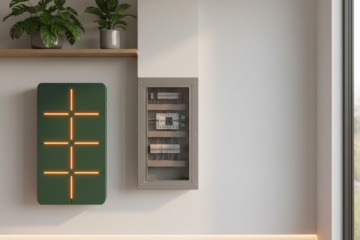
Can Energy Storage Systems Increase Your Home’s Value?
By Rowan Watts | Updated September 2026
This post contains affiliate links. As an Amazon Associate, ENERGY FOR THE TAKING earns from qualifying purchases at no extra cost to you.
Last updated: September 2026
If you have ever stood in your kitchen during a blackout and thought “there has to be a better way,” you are not alone. Home energy storage has moved from a niche green upgrade to one of the most requested features in areas with unreliable grids and rising electricity rates. But a battery is a serious investment, so the question every homeowner eventually asks is a practical one: do home batteries increase home value, or is that just marketing talk?
The honest answer for 2026 is nuanced. Appraisers and researchers have found real, measurable value attached to permanently installed storage systems. Meanwhile, a newer option, portable power stations, adds resilience you can literally pack in the moving truck. This guide walks through what the evidence actually says, how the economics changed after the federal tax credit expired, and which route makes sense for your home and your timeline.
Table of Contents
- Understanding Energy Storage Systems in 2026
- Do Home Batteries Increase Home Value? What the Evidence Shows
- The Appraiser Question
- How the Economics Changed After the 30% Federal Credit Expired
- Buyer Demand and Outage Resilience
- Portable Backup: Value You Can Take With You
- Marketing Your Home With Energy Storage
- Considerations Before You Install
- Final Verdict
- FAQ
- Solar-plus-storage sells as a package. Homes with both panels and an owned battery present buyers with a simple story: lower bills and backup power. That story supports a higher comparable price.
- Owned systems are worth more than leased ones. A battery the seller owns outright transfers cleanly at closing. Leased systems can complicate a sale, because buyers must assume the lease agreement, and some appraisers value leased equipment at or near zero.
- Location multiplies the effect. In California, Texas, and other markets with volatile rates or frequent shutoffs, the premium evidence is strongest. In areas with cheap, reliable power, the measured effect is smaller.
- California: Between NEM 3.0’s sharply reduced solar export rates, time-of-use pricing, and public safety power shutoffs, a battery has shifted from nice-to-have to near-necessity for many solar homes. Agents in wildfire-prone counties routinely list battery backup alongside roof and foundation in listing descriptions.
- Texas: The February 2021 Winter Storm Uri blackout became a lasting marketing event for home batteries. Years later, listings in Austin and Dallas still mention whole-home backup as a differentiator, and buyers who lived through the outage ask about it unprompted.
- Northeast and Midwest: Ice storms and aging distribution grids drive steady interest, though the resale premium evidence is thinner than in the big two markets above. Here the battery’s daily value comes more from bill management than from outage frequency.
- Payback periods are longer. A system that might have shown an effective net cost 30% lower in 2025 now needs to pay for itself through bill savings and outage avoidance alone. Depending on your rates and usage, that can push simple payback from the 7 to 10 year range toward 10 to 15 years.
- State and utility incentives matter more than ever. Several states (California’s SGIP program is the best known), and a number of utilities, still offer meaningful battery rebates. Check your state energy office and your utility’s website before you buy, because local programs are now the main game in town.
- Load growth from EVs and heat pumps is straining distribution grids, and utilities in some regions are using planned shutoffs and time-based rates to manage it.
- Extreme weather events have made multi-day outages a normal expectation rather than a rarity in many states.
- Time-of-use rates are spreading, which turns a battery into a daily bill-cutting tool, not just an emergency device. Charging when power is cheap and discharging in the evening peak can trim a noticeable slice off monthly bills.
- Put it in the listing headline area with capacity and savings figures: “Owned 13.5kWh battery, average $140/month electric savings.”
- Include a photo of the unit and, if possible, a simple one-page summary of its performance history.
- Complete any available energy certification (HERS score, ENERGY STAR, or a local green designation) to give appraisers and buyers third-party documentation.
- State clearly that the system is owned, not leased. This single fact removes the most common buyer objection.
- Cost: Installed systems typically run $10,000 to $15,000 before any local incentives. Portable stations run from a few hundred dollars to about $2,000 for serious capacity. Calculate payback using your actual rates, not marketing estimates.
- Space and installation: Wall-mounted batteries need a code-compliant location, often a garage or exterior wall, plus panel capacity and permits. Installation alone can add $2,000 to $4,000.
- Lifespan and warranty: Quality LFP batteries are typically warrantied 10 years and often last longer, with capacity fading gradually. Ask what capacity percentage the warranty guarantees at year 10.
- Chemistry: Prefer LFP (lithium iron phosphate) over older NMC lithium for longevity and safety, especially for indoor installs.
- Compatibility: If you have or plan solar, confirm the battery pairs with your inverter or choose an AC-coupled system that works with anything.
- Timing versus your sale plans: If a move is on the horizon within two years, the installed-battery math rarely works: you are unlikely to recoup the full cost in the appraisal premium, and you cannot take it with you. Portables (or simply doing nothing) usually win in that window. If you are staying long term, the calculation flips toward installing.
Understanding Energy Storage Systems in 2026
An energy storage system is essentially a large rechargeable battery for your house. It charges when electricity is cheap or abundant (midday sun on solar panels, off-peak grid rates) and discharges when power is expensive or unavailable. In 2026 that broad category splits into two very different products, and the distinction matters enormously for resale value.
Installed battery systems
These are permanently wired systems, typically lithium iron phosphate (LFP) batteries mounted on a garage or exterior wall and connected to your electrical panel, often alongside rooftop solar. Think products in the vein of a Tesla Powerwall or similar whole-home batteries. They stay with the house. When the home sells, the new owner inherits the battery, the bill savings, and the outage protection, which is exactly why appraisers can attach value to them.
Portable power stations
These are large-capacity battery units you plug appliances into directly. No electrician, no permits, no wiring into your panel. They range from small units that run a fridge and some lights to big models that can cover most of a home’s critical loads for a day. They do not appear on an appraisal, but they solve the same blackout problem and they move with you.
Do Home Batteries Increase Home Value? What the Evidence Shows
Let me be careful with the claim, because this is where a lot of articles overpromise. No credible source guarantees a specific dollar return, and no appraiser can promise your battery pays for itself at sale. What the research and market data do show is a consistent pattern: homes with owned solar and storage tend to sell for more than comparable homes without, and they tend to sell faster in markets where energy costs and outage risk are front of mind.
Studies of green-certified and high-efficiency homes have found sale price premiums ranging from about 3% to as much as 8% over comparable non-green homes, and appraiser tools like the Appraisal Institute’s green addendum have made it easier to capture the value of owned energy equipment. Real estate agents in outage-prone states report that battery-backed listings draw noticeably more interest, particularly since the major grid failures and public safety shutoffs of recent years.
Three patterns come up repeatedly in case studies and agent reports:
So the fair 2026 summary is this: installed energy storage has repeatedly been associated with higher sale prices and faster sales, but the size of the premium varies by market, and nothing is guaranteed. Frame it as a documented tendency, not a promise.
What this looked like in practice
To make the pattern concrete, here is how the numbers tend to break down in the markets where storage has the strongest track record:
The lesson for sellers: the premium is real but local. Before counting on it, ask a local agent how battery-backed homes actually priced in your zip code over the past year.
The Appraiser Question
Traditional appraisal methods were slow to recognize energy equipment, and that lag is shrinking but not gone. Fannie Mae’s appraisal forms now include fields for solar and storage, and a growing number of appraisers use paired-sales analysis (comparing similar homes with and without the equipment) to put a number on it. If you own an installed system, document everything: purchase price, capacity in kilowatt-hours, installation date, warranty terms, and actual utility savings. Hand that folder to your appraiser and your listing agent. Value that is not documented does not get counted.
How the Economics Changed After the 30% Federal Credit Expired
Here is the fact most 2024 and 2025 articles get wrong today: the 30% federal residential clean energy credit (Section 25D) expired on December 31, 2025. If you install a home battery in 2026, there is no federal tax credit waiting for you. Anyone still promising one is working from outdated information.
That changes the math in two ways:
Does the credit’s expiration kill the value argument? Not necessarily. If anything, it strengthens the resale-value case for installed systems: the buyer inherits equipment the seller paid full price for, and appraisal-supported premiums become a bigger share of the return. But go in with realistic expectations. In 2026, energy storage is a resilience purchase first and an investment second.
Buyer Demand and Outage Resilience
Ask any agent in an outage-prone region what buyers ask about now, and backup power comes up near the top of the list. Several converging trends explain why:
Surveys of homebuyers consistently show a willingness to pay more for homes with lower operating costs and proven outage protection. For sellers, that means a battery is no longer an exotic feature to explain at a showing. In many markets it is a listing headline.
The rented-versus-owned question keeps getting bigger
One more demand-side shift worth knowing about: as more homes add batteries, more buyers arrive having already researched them. Zillow and similar portals have added energy-related search filters, and agent groups report buyers specifically screening for backup power in outage-prone markets. That cuts both ways. An owned, well-documented system now actively attracts a segment of the market that filters for it. An undocumented or leased system can quietly lose those same buyers before they ever book a showing.
Portable Backup: Value You Can Take With You
Now for the honest twist. Everything above applies to installed, hard-wired systems. A portable power station will not raise your appraisal, because appraisers count fixtures, not appliances you can carry out the door. If maximizing resale value is your only goal, an installed battery is the tool for that job.
But portable units deserve a spot in this conversation for three reasons. First, resilience is real: a quality portable power station keeps your refrigerator, modem, lights, and medical devices running through a multi-day outage, which is the same daily-life benefit an installed battery provides. Second, they cost a fraction of an installed system, often under $2,000 versus $10,000 to $15,000 installed. Third, and this is the part sellers love, they move with you. When you sell the house, the battery goes in the trunk. You keep the asset, and you can honestly tell buyers the home has a proven backup plan that conveys with the sale’s closing-day walkthrough (or keep it for your next place).
If you want the portable route, these three units are the ones we consider genuinely capable of meaningful home backup:
1. EcoFlow DELTA 3 Plus – The best balance of capacity, charging speed, and price for most households. It recharges extremely fast (a big deal when you get a storm warning at 2 pm), runs a full-size fridge for many hours, and can expand with extra batteries if your needs grow. Its UPS-style switchover is quick enough that computers and routers stay up.
2. Bluetti AC200L – The high-capacity pick. With around 2,048Wh of storage and a 2,400W inverter, it covers heavier loads: a fridge plus freezer, well pump starts, space heaters for short stretches. It accepts substantial solar input, so during a prolonged outage you can recharge from panels indefinitely. Heavier and pricier than the DELTA 3 Plus, but that is the trade for capacity.
3. OUPES Mega 5 – The value workhorse. 5,040Wh of capacity with a 4,000W output at a price that undercuts most competitors in its class, which makes it the strongest pick if your priority is long runtime per dollar rather than fast charging or brand polish. Good fit for rural homes with longer, less frequent outages.
A quick note on what these can and cannot do, because honest expectations matter here. None of these will run a central air conditioner or an electric water heater; those loads need an installed system. What they will do is keep the essentials alive: refrigeration, internet, phones and laptops, lights, a microwave, CPAP machines and other medical devices. For most households, that covers the difference between an outage being an inconvenience and being a genuine emergency. If you want to size it yourself, list the wattage of everything you truly need, add a 20% buffer, and match the unit to that number rather than buying on capacity alone.
A practical setup many homeowners land on: one portable unit for daily blackout insurance now, with an installed battery on the wishlist for the next renovation cycle. For a deeper dive on sizing and features, see our guide to the best portable power stations for home backup.
Marketing Your Home With Energy Storage
If you are selling with an installed system, treat it like a feature, not a footnote:
Selling with portable backup? Mention it as included equipment (“portable power station conveys with sale”) only if you actually intend to leave it. Otherwise, show it as the home’s tested backup solution and take it with you.
Considerations Before You Install
One more warning worth its own paragraph: with the federal credit gone, some sales channels have gotten aggressive about inventing urgency. You may see “expiring federal incentive” language recycled from 2025 marketing. Verify every incentive claim directly on your state energy office’s site or your utility’s official rebate page before you sign anything, and treat any contractor who cannot point you to the specific program as a red flag.
If your main goal is trimming bills rather than backup power, start by measuring consumption with one of the best home energy monitors before spending battery money. And for a broader look at staying powered through grid failures, our guide to home energy storage for power outages covers the full range of options.
Final Verdict
Can energy storage systems increase your home’s value? For installed, owned systems, the evidence says yes, with caveats: studies and appraiser tools have repeatedly documented sale price premiums and faster sales, the effect is strongest in high-rate and outage-prone markets, and nothing is guaranteed. The 2026 economics are harder than they were during the tax credit era, so treat an installed battery as a resilience investment that may also help at sale time, not a guaranteed profit engine.
If you are not ready for a five-figure installation, a quality portable power station delivers most of the day-to-day resilience benefit at a tenth of the cost, and it is the only kind of battery that follows you to your next home. Either way, you are buying something buyers increasingly ask for by name: a home that stays on when the grid does not.
FAQ
Q: Do home batteries increase home value according to appraisers?
A: Appraisers increasingly recognize owned, installed battery systems, especially when sellers document capacity, cost, and utility savings. Tools like paired-sales analysis and the green addendum make it easier to capture that value. Portable power stations are treated as personal property, so they do not appear in the appraisal, though they still add practical resilience.
Q: Is the federal tax credit still available for home batteries in 2026?
A: No. The 30% federal residential clean energy credit under Section 25D expired on December 31, 2025. Some state programs and utility rebates remain, so check your state energy office and utility before buying, but do not count on any federal credit for a 2026 installation.
Q: How much value does an energy storage system add to a home?
A: Studies of energy-efficient and green-certified homes have found sale price premiums ranging from about 3% to as much as 8%, and agents in outage-prone or high-rate markets report stronger interest in battery-backed listings. The exact figure varies widely by location, system ownership, and documentation, so treat these as findings from past sales rather than a promise for yours.
Q: Should I choose a portable power station or an installed battery if I might sell my home soon?
A: If you are selling within a year or two, a portable power station is usually the smarter buy: lower cost, no permits, immediate resilience benefit, and it moves with you when you go. If you plan to stay five or more years, an installed owned system offers bill savings now and the documented appraisal premium at sale.
Q: Do leased or financed batteries hurt a home sale?
A: They can. Buyers must assume the lease or loan payments, which complicates financing and can shrink the buyer pool, and appraisers often assign leased equipment little or no value. Owned systems transfer cleanly and are the configuration most strongly associated with resale premiums.